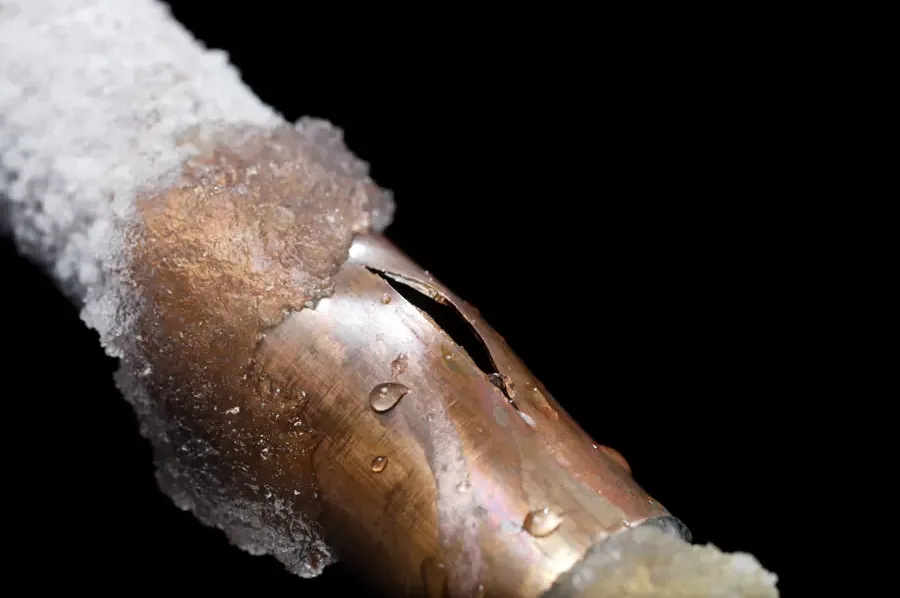
A pipe that freezes is not always a pipe that bursts, and the real flooding often starts hours later when the ice melts.
Key takeaways
- Running water is less likely to freeze, so a slow drip during a hard freeze helps.
- If a pipe freezes, shut off the water supply and call a plumber.
- Pipes along exterior walls or in crawl spaces benefit from frost wrap or insulating foam.
- The leak often appears at the thaw, so check the house when temperatures rise.
- Wet drywall, insulation and cabinet bases need drying even after the plumbing is repaired.
Why the thaw is the dangerous part
Ice in a pipe can crack the wall of the pipe, but the crack may stay plugged by ice until the temperature climbs.
When it thaws, water pours through the split into walls, ceilings and floors, sometimes while nobody is home.
That is why a dry house at night can be a wet house by lunch, and why checking the home as temperatures rise is such a useful habit.
- A crack stays sealed while ice holds.
- Water flows when the ice melts.
- A house can fill with water in a few hours.
Prevention that costs little
Extension advice published for Oklahomans is that running water is less likely to freeze, so a slow drip at a faucet on an exterior wall during a hard freeze can help.
Pipes along exterior walls or in crawl spaces benefit from frost wrap or insulating foam, which is a small cost compared with a flooded kitchen.
Insulating foam sleeves are inexpensive and snap around a pipe in a minute, and frost wrap goes on fast with a roll of tape.
A good time to do this is on a mild fall weekend, before anyone is rushing at night.
Before the first hard freeze
Fall is the time to wrap exposed pipes and disconnect garden hoses.
Open cabinet doors under sinks on exterior walls so warm room air reaches the pipes.
- Disconnect and store garden hoses.
- Wrap pipes in garages, attics and crawl spaces.
- Seal gaps where cold air enters near pipes.
- Know where the main shutoff valve is.
During the freeze
Keep the heat on, even in rooms you do not use, and let a faucet drip.
If you leave town, ask someone to check the house.
If a pipe is frozen right now
The extension advice is to shut off the water supply and call a plumber. Closing the supply limits how much water comes out if the pipe has already split.
Do not use an open flame to thaw a pipe, since that can start a fire or damage the pipe further.
If the pipe is behind a wall and cannot be reached, leave the supply off and call a plumber instead of cutting into the wall yourself.
Keep the faucet open while thawing so melting water has somewhere to go.
A pipe that has frozen once is likely to freeze again, so add insulation or a heat source as soon as the thaw is done.
- Shut off the main water supply.
- Open the faucet to let melting water out.
- Warm the area gently with a hair dryer or heated towels.
- Call a plumber if the pipe does not thaw or if you see a split.
When the pipe has already split
Shut off the main valve, turn off power to wet areas if it is safe, and move belongings out of the way.
The goal is to stop the water first, then remove it before it spreads into the framing.
Even a small split can release a lot of water over an hour or two, so speed matters more than neatness.
Move electronics and paper first, since those are the hardest to replace.
If the water is coming from a pipe you cannot reach, shut off the main valve and leave the rest to a plumber and a restoration team.
- Photograph the damage for insurance.
- Lift furniture and rugs from wet floors.
- Pull standing water with towels, mops or a wet vacuum.
- Open cabinets and closet doors to help air reach wet spaces.
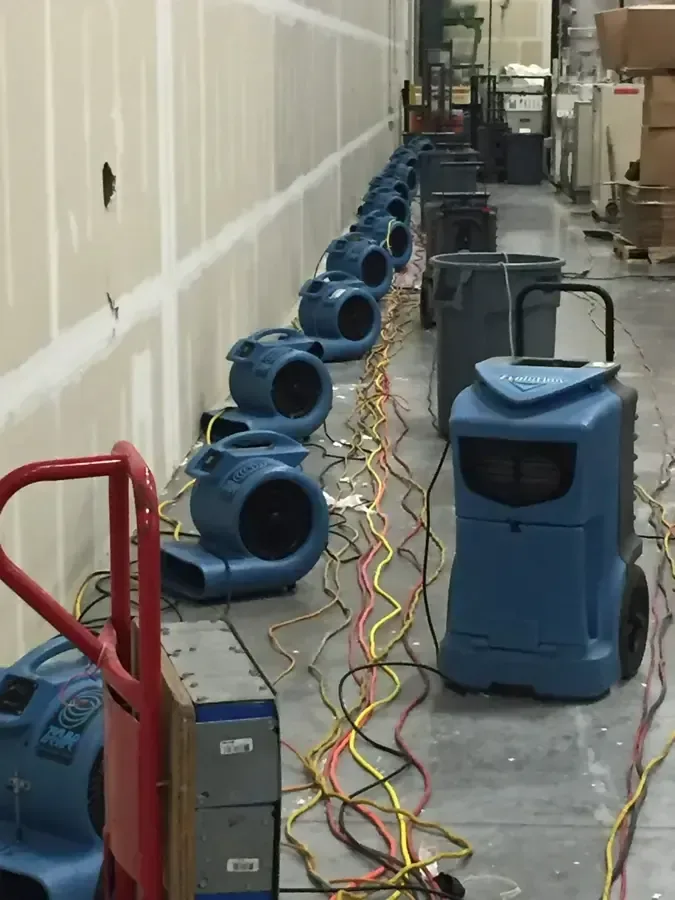
Drying the wall and floor
Water from a thawed pipe often runs inside the wall cavity, where it cannot be seen.
The frozen pipe water damage page explains how the cavity is traced, opened and dried after the plumber has made the repair.
Cabinet bases under kitchen and bath sinks are checked carefully, because the toe kick traps water that the surface does not show.
A wall that has been opened is not left that way for long. Once dry, it is closed and ready for repair.
Hardwood and laminate near the leak are checked for cupping, and baseboards are pulled so air can reach the bottom of the wall.
- Moisture maps help decide how much drywall to open.
- Insulation in the wall cavity is replaced if wet.
- Equipment is moved as the readings improve.
Finding the water
A moisture meter and a thermal camera show which sections of wall are wet, so only the damaged area is opened.
That keeps repairs smaller and the job cleaner.
Drying equipment
Air movers and dehumidifiers run until readings are normal. The water extraction step comes first whenever there is standing water.
A growing city and its older plumbing questions
The city grew from 20,884 residents in 2010 to 28,609 in 2020, about 37 percent growth, so many households are new to the area and its winters.
A newcomer may not know where the main shutoff is, so a quick check of every house is a good fall chore.
Families who move in during summer have never seen the house in a hard freeze, so the first winter is the real test.
- Find the main shutoff and test it once.
- Check outdoor spigots and hose connections.
- Know which rooms sit along exterior walls.
After the repair
Once the pipe is fixed and the water is removed, keep an eye on the area for a week. Stains, a musty smell or warped baseboards mean moisture is still present.
A burst pipe water damage check can confirm whether the wall is dry.
Photographs of the dried areas and a record of readings help if the insurer asks questions later.
If you rent, tell the landlord at once and keep copies of every message.
Questions
Should I leave a faucet dripping during a freeze?
Running water is less likely to freeze, so a slow drip at a faucet on an exterior wall can help during a hard freeze.
What should I do first if a pipe freezes?
Shut off the water supply and call a plumber. Closing the supply limits the water that comes out if the pipe has split.
Which pipes need insulation?
Pipes along exterior walls or in crawl spaces benefit from frost wrap or insulating foam.
Why does the leak appear after the thaw?
Ice can plug a crack in the pipe. When it melts, water flows through the split.
Is thawing with a torch safe?
No. An open flame can start a fire or damage the pipe. Gentle heat from a hair dryer is the safer choice.