Structural Drying and Dehumidification in Bixby, OK
Structural drying in Bixby homes and buildings goes past the surface: the drying team runs LGR dehumidifiers and air movers until framing, subfloor and concrete read within 2 to 4 points of dry, 24/7.
(888) 619-9509Need walls dried to S500?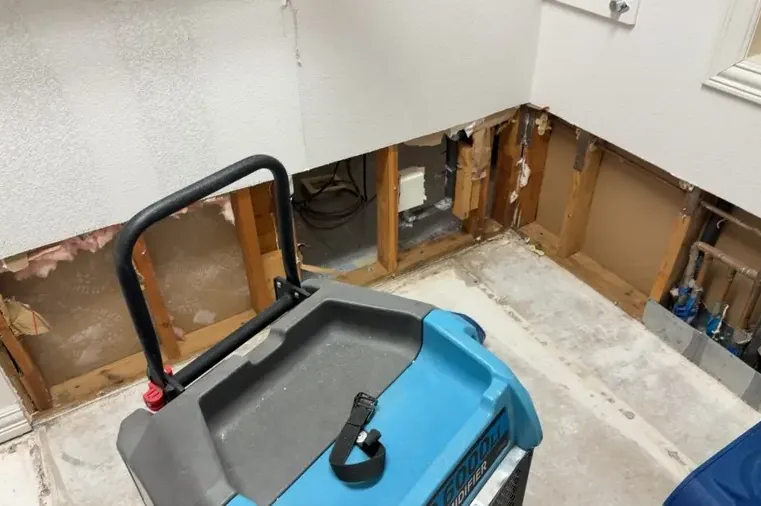
Why trained drying pros matter for this job in Bixby
Rapid local response
Dispatch runs 24/7, and active water is treated as urgent at any hour, holidays and ice storm nights included.
IICRC S500 drying standard
Structural drying, not surface drying: air movers and LGR dehumidifiers sized to the class of loss and left until readings say dry.
Claim-ready documentation
Moisture maps, daily psychrometric logs and timestamped photos taken before any demolition go into the claim file.
Local water experts
River flood plain, creek runoff, hard freezes and storm-driven rain all shape how water gets into homes south of Tulsa.
First steps for structural drying and dehumidification right now
Good drying starts with good extraction and a closed-up house, so the first steps set the stage.
- Remove standing water. Get liquid water extracted first; drying equipment cannot keep up with puddles.
- Close up the house. Keep windows and doors shut on humid days so outside air does not slow the drying.
- Leave equipment running. Do not switch off air movers or dehumidifiers overnight; drying stops when they do.
- Keep the area clear. Keep traffic and furniture out of the drying area so air can reach every wet surface.
What does structural drying and dehumidification cost in Bixby, OK?
Structural drying here typically runs $1,000 to $6,000, depending on the class of loss, the square footage and how many days the equipment has to run to reach the drying goal.
Class 1 or 2
- One or two rooms
- Air movers and LGR units
- Three to four days
Class 3
- Walls soaked high or ceilings
- More air movers per room
- Daily psychrometric logs
Class 4
- Brick, plaster or slab
- Desiccant dehumidifiers
- Full claim documentation
Ranges are typical, not a quote: the water category, square footage, material class and how fast drying started move the number most.
How structural drying and dehumidification is handled in Bixby, step by step
Map and classify
The walkthrough tech maps moisture in every material and sets the class of loss, which decides the equipment and the drying plan.
Set the equipment
Air movers and LGR or desiccant dehumidifiers are placed to match the evaporation load, with containment to keep the drying area tight.
Read every day
The drying team takes moisture and psychrometric readings daily and moves or adds equipment where materials lag behind.
Confirm dry
Equipment comes out only when wet materials read within 2 to 4 points of a dry reference, and the logs go into the claim file.
Structural drying is the part of a water loss nobody sees: pulling water out of framing, subfloor, drywall, brick and concrete after the standing water is gone. Done right, it is measured every day and stops only when the readings say dry, not when the room feels dry.
How the drying plan is built
The class of loss, from 1 to 4, describes how much water the materials absorbed and sets how many air movers and dehumidifiers a space needs. A Class 4 loss, with water in dense materials like brick, plaster or a slab, calls for desiccant or LGR dehumidifiers and more time. The brick buildings from the early town in Original Town and along Main Street behave very differently from a newer framed house near Riverview or Breckenridge.
- Moisture mapping before any equipment goes down
- Air movers set to the room's evaporation load
- LGR or desiccant dehumidifiers sized to the class
- Daily psychrometric readings logged for the claim
Walls or floors still reading wet after a leak? The drying team sets equipment and logs readings every day until it is dry.
Book moisture mappingWhy humid weather matters
Drying is a balance between evaporation and dehumidification. In humid weather, opening windows can push more moisture in than it lets out, so the drying team closes the space and lets the dehumidifiers control the air. The Energy Saver program explains how indoor humidity and ventilation affect a house, and the EPA flooded homes page covers drying after a flood.
Fans alone do not dry a house
Box fans move wet air around without removing the water from it. Without dehumidification the moisture settles back into drywall and wood, which is how mold gets its 24 to 48 hour start. Leave the drying equipment running and the windows closed until readings say dry.
When drying is done
Each wet material is compared to a dry reference of the same material in an unaffected part of the house. Equipment leaves when wet areas read within 2 to 4 points of that reference. The drying time estimator shows typical windows by class.
Structural drying and dehumidification on both sides of the river
Rapid local response, 24/7, wherever the water got in.
The restoration team covers ZIP 74008 on both banks of the Arkansas River, from Original Town and Southtown to Johns Park, Riverview Terrace, Saker and the homes off Memorial Road and 151st Street.
Nearby coverage reaches Jenks, Glenpool, Broken Arrow, Coweta, Sapulpa and Tulsa.
See every neighborhood and ZIP coveredRelated water damage services in Bixby
Structural Drying and Dehumidification questions, answered
Still dealing with the water?
Still reading wet? The drying team works 24/7.
(888) 619-9509 Request daily drying logsWhat is structural drying?
It is drying the building itself, framing, subfloor, drywall, brick and concrete, not just the surfaces. It uses air movers and dehumidifiers and is measured with daily readings.
How is structural drying measured?
With moisture meters on each wet material and psychrometric readings of the air. Materials are dry when they read within 2 to 4 points of a dry reference.
What is the difference between LGR and desiccant dehumidifiers?
LGR units cool the air to pull water out and work well in most homes. Desiccant units absorb water chemically and handle cold spaces and dense materials like brick and concrete.
Why can't I turn the equipment off at night?
Drying only happens while air moves and the dehumidifiers run. Turning them off lets moisture settle back into the materials and adds days.
What does Class 1 to 4 mean?
The class describes how much water was absorbed. Class 1 is a small, low-absorption loss; Class 4 involves dense materials like brick, plaster or concrete that need specialty drying.
Does insurance pay for structural drying?
When the water loss itself is covered, drying is usually part of the mitigation. Coverage depends on your policy, so check with your own insurer.
How long does structural drying take?
Most losses dry in three to seven days. Class 4 losses in brick, plaster or concrete can take longer, and readings decide.
Walls still wet after a leak? Get the drying started today.
Drying is measured, not guessed. The drying team logs readings every day until materials match the dry reference.
(888) 619-9509Get the structure read dry