Water Extraction and Removal in Bixby, OK
Standing water in a Bixby home gets pulled with truck-mounted extraction, then the drying team sets air movers and LGR dehumidifiers and keeps reading moisture until the house reads dry, 24/7.
(888) 619-9509Get the pumps on the water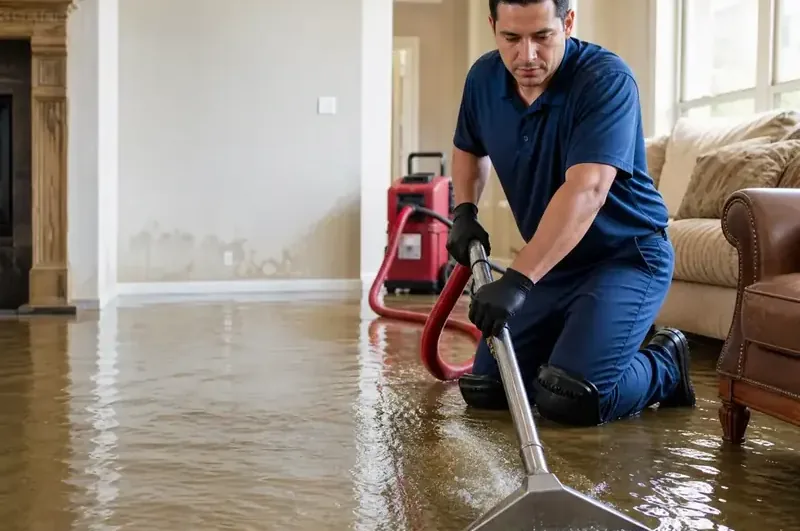
Why trained drying pros matter for this job in Bixby
Rapid local response
Dispatch runs 24/7, and active water is treated as urgent at any hour, holidays and ice storm nights included.
IICRC S500 drying standard
Structural drying, not surface drying: air movers and LGR dehumidifiers sized to the class of loss and left until readings say dry.
Claim-ready documentation
Moisture maps, daily psychrometric logs and timestamped photos taken before any demolition go into the claim file.
Local water experts
River flood plain, creek runoff, hard freezes and storm-driven rain all shape how water gets into homes south of Tulsa.
First steps for water extraction and removal right now
Standing water does its worst damage in the first day, so the steps below buy time before the extraction crew arrives.
- Shut off the source. Close the main valve or the fixture valve if a pipe, heater or appliance is still feeding water.
- Cut power to wet rooms. Switch off breakers to rooms with standing water if the panel is dry and safe to reach.
- Lift what can move. Get rugs, papers, electronics and furniture off the wet floor and onto a dry surface.
- Photograph first. Take photos and video of every wet room before anything is moved or thrown out.
What does water extraction and removal cost in Bixby, OK?
Water extraction and drying here typically runs $1,200 to $5,500, depending on the square footage, the water category and whether carpet and pad can stay. A single room caught early sits at the low end.
One room
- Clean water caught early
- Carpet often saved
- Two to three days of drying
Several rooms
- Pad removed and replaced
- Wall bottoms checked
- Daily moisture readings
Whole floor
- Category 2 or 3 water
- Carpet and pad removed
- Full claim documentation
Ranges are typical, not a quote: the water category, square footage, material class and how fast drying started move the number most.
How water extraction and removal is handled in Bixby, step by step
Map the wet area
The walkthrough tech maps moisture across floors and wall bottoms, so extraction covers every wet room and not just the visible puddle.
Extract hard
The extraction crew runs truck-mounted units and weighted tools over carpet and pad, pulling out as much liquid water as possible first.
Set the drying plan
Air movers and LGR dehumidifiers are placed to match the room's evaporation load and the class of the loss.
Read until dry
Daily readings track every wet material to the S500 goal, and equipment leaves only when the numbers match a dry reference.
Extraction is the first and cheapest step of any water loss. Every gallon pulled out as liquid is a gallon the dehumidifiers never have to evaporate, so the extraction crew works the floors, carpet and pad hard before a single air mover goes down.
Why extraction comes before drying
Water that sits on a floor keeps wicking up drywall and soaking into pad, subfloor and the bottom plate of the walls. A truck-mounted unit pulls far more water than a shop vacuum, and weighted extraction tools squeeze carpet and pad so the drying stage starts with less water to remove. On the south bank, where ground-level homes in Riverview Terrace and Johns Park took water during the May 2019 Arkansas River flooding, fast extraction is what keeps a one-day mess from turning into a full tear-out.
- Standing water pulled from every wet room, not just the obvious one
- Carpet and pad lifted, extracted or removed by category
- Wet-vac and pump-out for garages and ground-level rooms
- Moisture readings taken before and after extraction
Water still standing on the floor? Every hour it sits, more of it wicks into drywall and pad. The extraction crew rolls out any hour.
Send the extraction rigWhat decides whether carpet and pad stay
Clean water from a supply pipe, caught early, often lets carpet stay after extraction while the pad is replaced. Gray water from a washer usually means the pad comes out. Flood water off a creek, like the water that reached Southtown in May 2022, is Category 3, so carpet and pad it touched are removed and bagged. The Ready.gov flood safety page explains why water from outside is never treated as clean.
Do not use a household vacuum on standing water
A regular vacuum is not built for water and can create a shock hazard. If the panel is dry, shut off power to the wet rooms, keep people and pets out, and leave the pumping to truck-mounted equipment. Wet carpet is also heavier than it looks, so leave lifting it to the crew.
Where the water hides after the floor looks dry
The tech who does the walkthrough checks behind baseboards, under cabinets and inside wall cavities with pinless meters and thermal imaging. Wherever a house sits on a concrete slab, from the streets off Memorial Road to the subdivisions toward 129th Street, water runs under flooring and stays there. The EPA WaterSense program covers how to spot hidden household leaks before they become extraction jobs, and the drying time estimator shows how long the next stage usually takes.
Water extraction and removal on both sides of the river
Rapid local response, 24/7, wherever the water got in.
The restoration team covers ZIP 74008 on both banks of the Arkansas River, from Original Town and Southtown to Johns Park, Riverview Terrace, Saker and the homes off Memorial Road and 151st Street.
Nearby coverage reaches Jenks, Glenpool, Broken Arrow, Coweta, Sapulpa and Tulsa.
See every neighborhood and ZIP coveredRelated water damage services in Bixby
Water Extraction and Removal questions, answered
Still dealing with the water?
Water on the floor right now? The extraction crew works 24/7.
(888) 619-9509 Ask how soon pumps can startHow fast should water extraction start?
As soon as possible. Water starts wicking into drywall and pad within hours, and mold can start growing on wet materials within 24 to 48 hours. Dispatch treats active water as urgent at any hour.
Can wet carpet be saved after extraction?
Often, if the water was clean and extraction started early. The pad underneath usually gets replaced. Carpet touched by gray water is judged case by case, and carpet touched by flood water or sewage is removed.
What is the difference between extraction and drying?
Extraction removes liquid water with pumps and wands. Drying removes the water that soaked into materials, using air movers and dehumidifiers over several days. Extraction makes drying faster and cheaper.
Why does extraction cost less than tear-out?
Every gallon pulled out as liquid is a gallon that never soaks deeper into drywall and subfloor. Fast extraction means fewer materials get cut out and replaced.
Does water extraction work on hardwood floors?
Yes. Surface water is pulled first, then specialty drying mats and dehumidifiers draw water out of the boards. Results depend on how long the wood sat wet and how it was installed.
Will insurance pay for water extraction?
Sudden and accidental water, such as a burst pipe, is often covered, while flood water from outside usually needs a separate flood policy. Coverage depends on your policy, so check with your own insurer.
How do I know the floor is really dry?
Readings decide, not touch. The drying team compares wet materials to a dry reference in the same house and keeps equipment running until they read within 2 to 4 points of it.
Standing water in the house? Get it pulled out now.
The longer water sits, the more comes out with it. One call starts truck-mounted extraction and drying.
(888) 619-9509Pull the standing water now