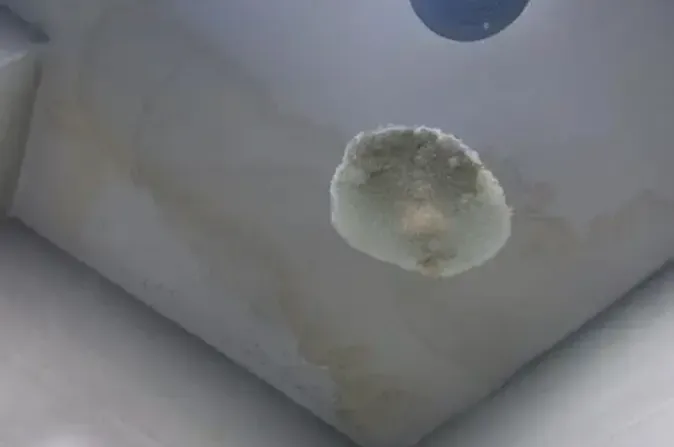
A ceiling can look fine for hours while water collects above it, and then the weight of that water brings the whole panel down.
Key takeaways
- Water collects in the gap above drywall, adding weight until the ceiling sags or falls.
- A waterline break caused a partial ceiling collapse at the Oklahoma Aquarium in Jenks, showing what water above a ceiling can do.
- A bulge or brown stain means water is trapped, so stay out from under it.
- Shut off the water source, then relieve the bulge in a controlled way.
- Wet insulation and joist bays need drying even after the visible stain is gone.
A real example in Jenks
A waterline break caused a partial ceiling collapse at the Oklahoma Aquarium in Jenks.
That is a large public building, but the physics are the same in a house: water pools above the drywall and adds weight until something gives.
The aquarium is one of the best known buildings in the city, and the incident is a useful reminder that water above a ceiling can be as damaging as water on a floor.
In a home the amount of water is smaller, but the ceiling is lighter too, so even a modest leak can bring a section down.
Why ceilings fail under water
Drywall is strong in normal use but weak when wet. Water softens the paper face and the gypsum core, and fasteners pull through.
Insulation above the ceiling soaks up water like a sponge, which makes the load heavier and slower to drain.
The weight adds up faster than most people expect, because water is heavy and wet insulation holds a lot of it.
That is why a ceiling stain should never be painted over until the source and the moisture are dealt with.
A ceiling that has dried after a leak can still be weak, so a sagging section is replaced even when it looks dry.
- Water pools between joists.
- Wet insulation adds weight.
- Drywall softens and loses grip on its screws.
- A small stain can hide a lot of water behind it.
Signs the ceiling is holding water
The first sign is often a stain that grows or changes color, then a bulge, a drip or a crack in the paint.
If you see any of these, assume there is more water above than you can see.
Stains from an old, dry leak look different from a live one: dry stains have hard edges and no movement, while a live stain feels cool and slightly soft.
Warning signs
Look up when you walk into a room below a bathroom, laundry or roof leak.
- A brown or yellow ring that spreads.
- A bulge or belly in the drywall.
- Dripping from a light fixture or vent.
- Paint that bubbles or peels.
Where the water usually comes from
Upstairs bath and supply pipes, drain leaks, roof leaks and water heaters in an attic or closet are the common sources.
The source decides who to call first, but the ceiling needs attention either way.
What to do first
Shut off the water source if it is a pipe or fixture. For a roof leak, move belongings out of the room and place a bucket or tarp.
Stay out from under a bulging ceiling, and keep children and pets away.
If the stain is near a light fixture, do not touch the switch with wet hands, and leave the fixture off until it has been checked.
Do not climb into the attic during a leak, since wet insulation hides the joists and a misstep can go through the ceiling.
- Turn off the water supply to the suspected leak.
- Switch off power to the room if water is near fixtures.
- Move furniture and rugs away from the stain.
- Photograph the ceiling before anything changes.
Relieving a bulge safely
Water trapped in a bulge can be released in a controlled way by making a small opening at the lowest point while standing to the side with a bucket underneath.
Doing this early prevents a sudden collapse, but it is a task for a careful adult wearing eye protection.
After the water has drained, leave the opening in place so air can reach the cavity, and place a plastic sheet or bucket below until help arrives.
If the ceiling already looks ready to fall, do not stand under it. Leave the room and wait for a professional.
- Place a bucket or tub under the bulge.
- Use a screwdriver to make a small hole at the lowest point.
- Stand to the side, not directly under the opening.
- Let the water drain and then stop.
Drying what is above the ceiling
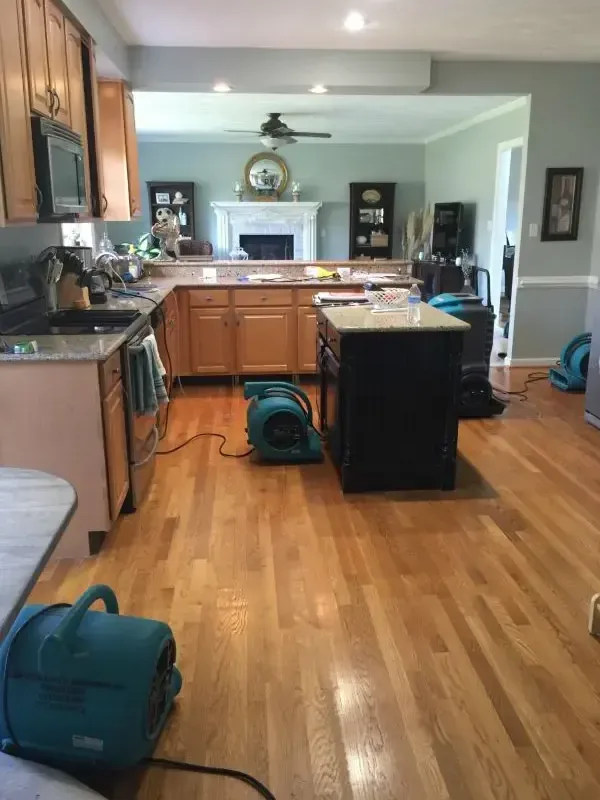
After the water is drained, the ceiling is opened where needed so the joist bays and insulation can be dried or replaced.
The ceiling leak water damage page describes how sagging drywall is opened safely and how the cavity is dried.
For standing water on the floor below, water extraction handles the removal.
A thermal camera and a moisture meter show where water is hiding, and removing wet insulation early prevents a long, slow dry.
Joists that stay damp can swell or stain, so they are dried to normal readings before the ceiling is closed up.
Once the cavity is dry, the replacement drywall is taped, textured and painted, and the ceiling matches the room again.
- Wet insulation is removed and replaced.
- Joist bays are dried with air movers.
- Readings are recorded before drywall is replaced.
Jenks homes and next steps
Jenks grew from 9,557 residents in 2000 to 25,949 in 2020, so many houses are newer and may have pipes and fixtures upstairs that have not been checked in years.
The town page for ceiling leak cleanup shows what that cleanup looks like locally.
Treat a ceiling stain as a warning, not a cosmetic issue, and act on it as soon as you notice it.
- Look at ceilings below bathrooms once a season.
- Replace old supply hoses before they fail.
- Keep the attic access clear so a leak can be seen.
Questions
What happened at the Oklahoma Aquarium?
A waterline break caused a partial ceiling collapse. It shows what water collecting above a ceiling can do.
Why does a ceiling sag before it falls?
Water adds weight and softens the drywall, so the panel bows downward until the fasteners let go.
Is it safe to poke a hole in a bulging ceiling?
It can relieve trapped water if done carefully at the lowest point with a bucket below and while standing to the side. If unsure, stay out of the room.
Do I need to dry the insulation above?
Yes. Wet insulation holds water and keeps the ceiling and joists damp long after the stain stops growing.
What should I do before help arrives?
Shut off the source, move belongings away, keep people out from under the stain and photograph the damage.