Water Extraction in Jenks, OK
Pumps and extraction wands lift standing water off floors, carpet and pad, because every hour of soaking pushes moisture further into subfloors, trim and the bottoms of walls.
(888) 619-9509Water on the floor? Call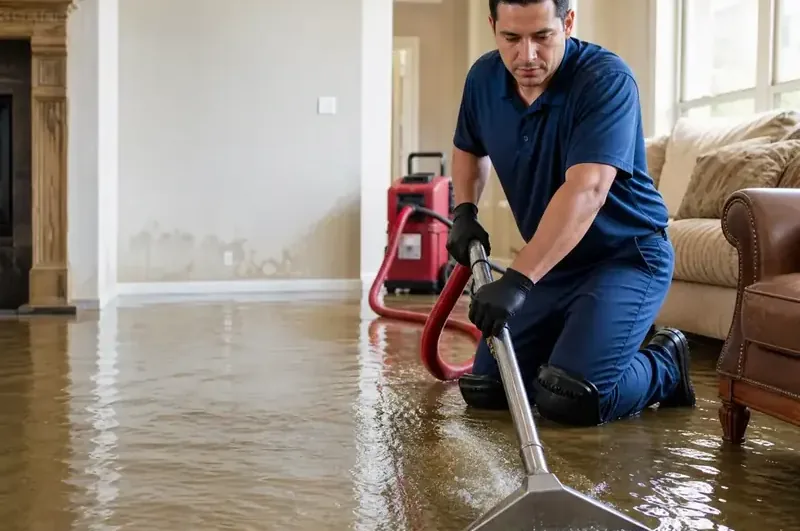
Why trained drying pros matter for this job in Jenks
Rapid local response
Dispatch runs 24/7, and active water is treated as urgent at any hour, holidays and ice storm nights included.
IICRC S500 drying standard
Structural drying, not surface drying: air movers and LGR dehumidifiers sized to the class of loss and left until readings say dry.
Claim-ready documentation
Moisture maps, daily psychrometric logs and timestamped photos taken before any demolition go into the claim file.
Local water experts
River flood plain, creek runoff, hard freezes and storm-driven rain all shape how water gets into homes south of Tulsa.
First steps for water extraction and removal right now
Standing water is already soaking in. These moves protect the floor and the claim until the extraction crew starts.
- Stop the source. Close the shutoff valve or stop the leak first, since pumping a floor that keeps filling only wastes effort.
- Cut the power. Switch off breakers to wet rooms and stay out of standing water near outlets, cords and appliances.
- Lift what can move. Take up rugs, books and small furniture, and set furniture legs on foil or blocks so stain does not transfer.
- Photograph the water. Capture the depth, the source and ruined items before anything is moved, for the insurer.
What does water extraction and removal cost in Jenks, OK?
Water extraction usually costs $1,200 to $5,500 in total, depending on whether the water covers one room or a whole floor and how much pad and flooring must come out.
One room
- Water pumped out
- Pad cut and removed
- Readings logged
Several rooms
- Wand and pump work
- Baseboards checked
- Moisture map drawn
Whole floor
- Larger pump setup
- Flooring pulled back
- Complete claim photos
Ranges are typical, not a quote: the water category, square footage, material class and how fast drying started move the number most.
How water extraction and removal is handled in Jenks, step by step
Find the water
The crew traces where the water came from, tests its category and walks every wet room with a moisture meter, marking the edges.
Pull the bulk out
Truck mounted or portable pumps remove deep water, then wands and vacuums lift what remains from carpet, pad and hard floors.
Remove the soaked
Pad that cannot dry in place is cut out, baseboards come off where needed, and wet debris is bagged and carried out.
Hand off to drying
Air movers and dehumidifiers take over with fresh readings noted, and the paperwork for the adjuster is put together.
Extraction is the first job on any wet floor. Pumps, wands and weighted tools pull standing water and soaked pad out of a building before drying equipment starts, which keeps a spill from turning into a rebuild.
Why speed matters on wet floors
Water that sits wicks upward into drywall, baseboards and cabinet kicks, and it sinks through carpet into the pad and subfloor. Pulling the bulk out first leaves far less moisture for air movers and dehumidifiers to handle, and it shortens the whole dry out. Even a thin film under a laminate or vinyl plank floor can travel, so the crew checks beyond the visible edge of the wet area before deciding where the pumps go.
- Standing water pumped or vacuumed from the floor
- Soaked carpet pad cut and removed
- Moisture readings taken before drying begins
- Photos saved for the insurance file
Water across a floor right now? Pumps and wands lift it so soaking stops spreading into walls and subfloor. A call starts the extraction plan.
Start the pumpingRunoff, ditches and storm drains
Jenks has a long record of Arkansas River and Polecat Creek overflow, and the city relies on open ditches and closed storm drains to carry runoff away from houses. Keeping the ditch out front clear is the owner's job, and a blocked one can send water toward the door. Water that comes in from outside is treated differently from a supply pipe leak, because runoff carries soil and bacteria, and that changes what can stay in the house afterward.
Skip the household vacuum
Ordinary vacuums are not built for water, and mixing them with wet floors and outlets risks a shock. Soak up small spills with towels, stay clear of cords and power strips on the floor, and leave deep water to extractors made for the job. Wet shoes track water and dirt into dry rooms too.
What an extraction visit involves
The crew finds the source, checks the water category and sets up the pumps. Wands and weighted extractors work the carpet and pad, hard floors are squeegeed and vacuumed, and every wet area is logged with a moisture meter so drying starts from known readings. Afterward, the crew explains which materials can stay, which must go and what the drying stage will look like, so the owner knows the plan before drying equipment goes in.
Water extraction and removal across Jenks and nearby towns
Rapid local response, 24/7, wherever the water got in.
Extraction crews reach properties across ZIP 74037, from houses near the Arkansas River and U.S. Route 75 to the newer streets built as the city grew, plus shops and offices.
The same service nearby: water extraction and removal in Bixby, Glenpool, Sapulpa.
Water damage restoration in JenksWater Extraction and Removal questions, answered
Still dealing with the water?
Water still on the floor? The extraction crew is a phone call away, any hour.
(888) 619-9509 Arrange the standing water pickupHow fast does standing water need to come out?
As soon as possible. Water starts moving into drywall, trim and subfloor right away, so the sooner pumps and wands pull it out, the less material has to be removed and the shorter the drying stage.
Is extraction different from drying?
Yes. Extraction removes liquid water by pump and vacuum, while drying uses air movers and dehumidifiers to pull out moisture that soaked into materials. Extraction always comes first because it removes most of the water.
Can wet carpet be saved after extraction?
Often the carpet can, but the pad usually cannot. Pad holds water like a sponge and dries slowly, so it is commonly cut out and replaced while the carpet is lifted, cleaned and dried or reset.
What if the water came from a ditch or storm drain?
Water from outside is treated as contaminated because it carries soil and runoff. The crew tests it, extracts it and removes porous materials it touched. A clear right of way ditch helps prevent repeats.
Does extraction work on hardwood and tile?
Yes. Hard floors are squeegeed and vacuumed, then checked for water in seams and underneath. Wood needs quick attention because boards can cup, so drying equipment often follows right away.
Will insurance pay for water extraction?
Many homeowner policies cover sudden water events such as a burst pipe or appliance failure, though rising flood water often needs separate flood coverage. Photos, readings and invoices help the adjuster review the claim.
What should be moved before the crew starts?
Valuables, electronics, papers and small furniture should go to a dry room. Heavy furniture can stay, since crew members lift it onto blocks, and porous items that sat in water are set aside for the adjuster.
Pull the water out before it sinks in
Standing water soaks into pad, trim and subfloor with each passing hour. Pumps and wands lift it so drying can start.
(888) 619-9509Begin the extraction