Water Extraction and Removal in Sapulpa, OK
Flash floods and failed supply pipes leave water sitting on floors and soaking into pad and baseboards. Crews pump and vacuum it out first, then check every surface for moisture that remains.
(888) 619-9509Standing water? Call now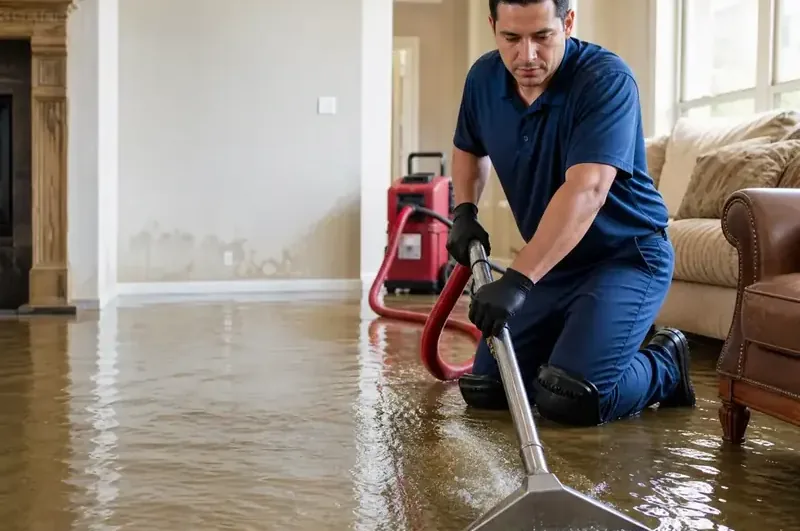
Why trained drying pros matter for this job in Sapulpa
Rapid local response
Dispatch runs 24/7, and active water is treated as urgent at any hour, holidays and ice storm nights included.
IICRC S500 drying standard
Structural drying, not surface drying: air movers and LGR dehumidifiers sized to the class of loss and left until readings say dry.
Claim-ready documentation
Moisture maps, daily psychrometric logs and timestamped photos taken before any demolition go into the claim file.
Local water experts
River flood plain, creek runoff, hard freezes and storm-driven rain all shape how water gets into homes south of Tulsa.
First steps for water extraction and removal right now
Extraction follows a set order, whether the water came from a pipe, a storm or a failed appliance hose.
- Shut off the source. The supply valve or appliance connection is closed so no more water arrives while the pump-out begins.
- Clear the deep water. Portable and truck-mounted pumps remove standing water from floors, starting with the lowest areas of each room.
- Work the wet layers. Wands and vacuums draw water out of carpet and pad, and hard floors are squeegeed and vacuumed dry.
- Map what remains. Meters and cameras show where moisture is still hiding, and the drying plan is built from those readings.
What does water extraction and removal cost in Sapulpa, OK?
A single room usually costs $1,200 to $2,200 to extract and start drying, while a whole floor can reach $5,500 or more. Depth of water and how long it sat set the final number.
One room
- One room affected
- Clean water source
- Pump-out and checks
Several rooms
- Water in a few rooms
- Carpet and pad lifted
- Extra extraction time
Whole floor
- Deep or wide water
- Flooring removal likely
- Long equipment run
Ranges are typical, not a quote: the water category, square footage, material class and how fast drying started move the number most.
How water extraction and removal is handled in Sapulpa, step by step
Source is stopped
The crew confirms the valve is shut or the leak is controlled, since extraction cannot keep up with water that is still running.
Pumps go to work
Pumps clear the deepest water first, then lighter extraction tools reach thin layers sitting over flooring and thresholds.
Carpet and pad are treated
Wet pad is usually cut out and discarded, while carpet is lifted or extracted in place depending on how clean the water was.
Findings are recorded
Photos and meter readings are logged so the next stage of drying, and the insurance record, start from a clear baseline.
Water that sits on a floor does not stay on the floor. It wicks into drywall, soaks the pad under carpet and creeps behind baseboards. Extraction is the step that stops that spread, and it has to come before any drying gear is set up.
What extraction removes
Pumps handle the deep water, and wands or vacuums pull what is left out of carpet fibers and off hard floors. The goal is to take out as much liquid as possible mechanically, because every bit left behind has to be evaporated later.
- Standing water on floors and in low spots
- Water trapped inside carpet and pad
- Puddles beside baseboards and cabinet bases
- Residue pushed into thresholds and closets
Water covering the floor and still spreading? Fast extraction decides how much carpet, pad and drywall can be saved, so a crew with pumps can be sent right away.
Dispatch the pump crewWhy flash floods need it
On June 6, 2026, flash flooding reached areas of Sapulpa including South Hickory Street, the area near Kelly Lane Park and the neighborhood near Taft. When water arrives that quickly, it covers a floor in minutes and begins soaking into materials at once, so the pump-out cannot wait for the rain to stop.
Do not wait for the rain to stop
Water standing in a room keeps soaking into baseboards, drywall and subfloor the whole time it sits there. Starting the pump-out while the storm is still passing usually saves more material than waiting for a clear sky. Every extra hour of sitting water means more drywall wicking upward.
What happens after the water is out
Once the surface water is gone, the crew moves through the rooms with moisture meters and a thermal camera to find what is still wet. That map decides where air movers and dehumidifiers go, and which materials are better removed than dried. Extraction sets up everything that follows.
Signs extraction cannot wait
Some situations push the pump-out to the top of the list. Water deeper than the baseboards, water creeping toward carpet seams and hallways, and water that has reached outlets all call for fast action. Once the bulk is out, the next stage is drying the structure, where meters direct the equipment. Anyone unsure how far the water has gone can start from the Sapulpa water damage hub and compare the services.
Water extraction and removal across Sapulpa and nearby towns
Rapid local response, 24/7, wherever the water got in.
Extraction crews work across the city, including the creek-side blocks near Taft, the streets around South Hickory, and homes and shops close to downtown and Route 66.
The same service nearby: water extraction and removal in Bixby, Glenpool, Jenks.
Water damage restoration in SapulpaRelated water damage services in Sapulpa
Water Extraction and Removal questions, answered
Still dealing with the water?
Water on the floor? Start the pump-out before it soaks deeper.
(888) 619-9509 Call for pump-out helpHow quickly should standing water be removed?
As soon as the source is controlled. Water begins soaking into drywall and wood right away, so the earlier the pump-out starts, the less material has to be replaced.
Can a shop vacuum handle it?
A shop vacuum helps with a small spill, but it cannot move the volume a flooded room holds or pull water from deep inside carpet pad, which is why pumps and wands are used.
Will the carpet have to be replaced?
Not always. Carpet that got clean water and was extracted fast can often be saved, though the pad underneath is usually replaced because it holds water too long.
Is the water safe to touch?
Clean supply water is lower risk, but floodwater and sewage carry bacteria. If the source is unknown, treat the water as contaminated and keep people and pets away.
Does extraction finish the job?
No. It removes the bulk of the liquid, but moisture remains inside materials, so drying equipment and readings follow to bring the structure down to dry goals.
Will the electricity need to be off?
Often yes in wet areas. Water and live circuits are a shock risk, so power to affected rooms is switched off before crews step in with electric pumps.
What does extraction cost?
A one-room job runs $1,200 to $2,200 and a whole floor can reach $5,500 or more. Depth, duration and the type of flooring all move the figure.
Get standing water out of the house
A call sends pumps, wands and moisture meters to the property so extraction starts while there is still a lot to save.
(888) 619-9509Send the pump crew