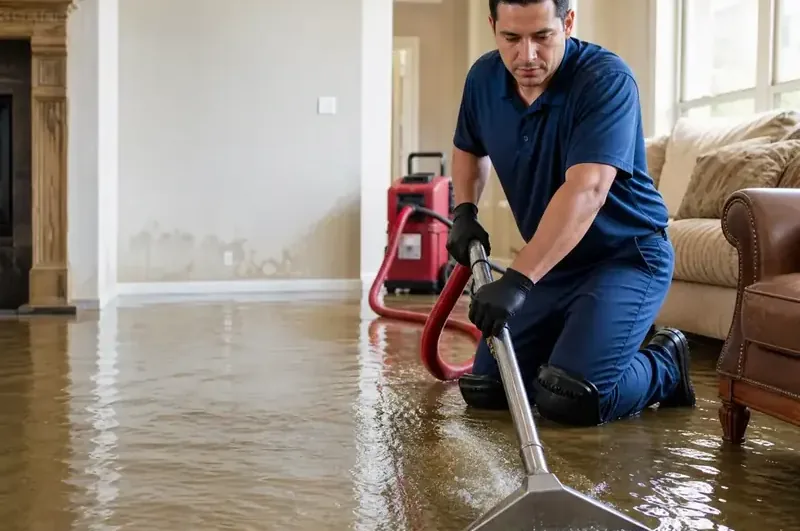
Water that arrives from a creek or river behaves differently from water that leaks from a pipe, and the removal plan starts with that difference.
Key takeaways
- Overflow water arrives dirty and in volume, so pumping comes before anything else.
- The city sits between the Arkansas River and U.S. Route 75, with Polecat Creek flowing to the river nearby.
- Floods from river and creek overflow were common from 1904 through the 1950s, and the 1986 Keystone Dam release forced a mandatory evacuation.
- Owners are expected to maintain the ditch on the right of way in front of their property.
- Wet materials that touched creek water usually come out, and framing is dried afterward.
A town built beside moving water
Jenks began in 1904 beside the Arkansas River and sits between the river and U.S. Route 75.
Polecat Creek flows to the river near town, and a USGS gauge sits on the creek at Jenks.
From 1904 through the 1950s the area had many floods from overflow of the river and the creek.
That history is why long time residents tend to keep an eye on creek levels after a heavy rain, even when the sky has cleared.
The 1986 release and what it showed
In 1986 heavy rain upstream led the Corps of Engineers to release as much as 300,000 cubic feet per second from Keystone Dam.
The release brought a mandatory evacuation order in Jenks and several other river communities, and the water took weeks to recede.
The National Weather Service ranks that flood as the second highest crest on record at Polecat Creek near Jenks.
A flood of that size is rare, but it shows that the Arkansas River and its creeks can put water where nobody expects it for a long time.
- Water can stay in a low area for weeks, not hours.
- A long soak pushes moisture deep into wood and concrete.
- Slow recession means drying cannot begin until the pumping is done.
How overflow water gets pumped out
The first goal is to move the volume of water out of the structure before it saturates the walls, so portable pumps and extraction units go to work on the lowest areas.
The water extraction service takes standing water from floors, then removes what is trapped in carpet and pad.
Safety comes first. Water in a garage or ground floor room can hide electrical cords, so power is shut off to the affected area before anyone steps in.
- Do not pump water out of a low room all at once if the ground outside is still saturated, since pressure can shift walls. The team judges this on site.
Order of work
Pumps handle depth first. Extraction wands then pull the water that soaked into floor coverings.
Only after the surface water is gone can the team see how far the damage climbed up the walls.
- Pump out standing water in the lowest rooms.
- Extract carpet and pad, or cut them out if they touched creek water.
- Check the wall base with a moisture meter before drying starts.
Why the water cannot just drain on its own
Water in a closed garage or ground floor room has nowhere to go, and it keeps wicking into drywall from the bottom edge.
Waiting for the yard to dry often means waiting while the walls drink.
Ditches, drains and who keeps them clear
Jenks drainage has open parts, such as swales and ditches, and closed parts, such as storm water inlets and storm drain pipes.
Public Works clears the closed system through the year and handles open ditches on an emergency basis.
Residents are expected to maintain the ditch on the right of way in front of their property, and dumping in ditches and storage basins is against city ordinance.
A clogged ditch does not just flood a yard. It can push water toward a garage door and under it, and from there into the house.
Clearing leaves and trash before a storm takes only a few minutes and keeps the path open.
- Keep grass clippings, leaves and trash out of the ditch.
- Do not fill or regrade near the ditch without checking with the Building Inspections Department.
- Report blocked storm drains to Public Works.
What happens to the walls and floors
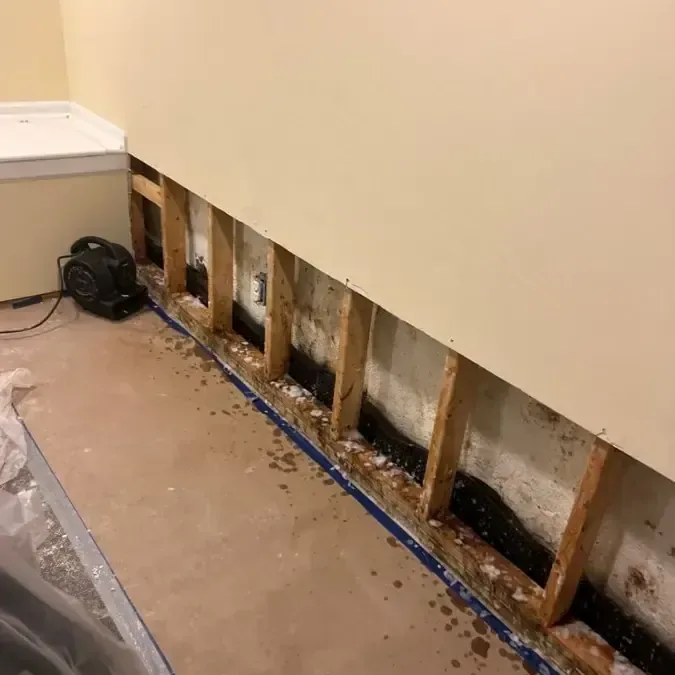
Drywall that wicked creek water is cut out above the waterline so the wall cavity can air out.
Insulation that got wet is removed, since it holds water and contamination long after the surface looks dry.
Hardwood and laminate that stayed wet beside a wall often cup or lift, so they are checked with a meter before anyone decides to replace them.
Cabinet bases are checked too, because water can wick up the toe kick and into the back panel.
- Carpet pad that touched overflow water is discarded.
- Baseboards come off so the wall base can dry.
- Subfloors and framing are cleaned, then dried in place.
Drying and final checks
After removal, air movers and dehumidifiers run until moisture readings match dry reference points.
The flood water cleanup plan ties the pumping, removal and drying together so nothing is missed.
For a Jenks home the local pages for water extraction and flood cleanup give the same steps in town form.
Final readings are recorded so there is proof the structure is dry, which matters for insurance and for any later repairs.
Water that has stopped rising is not always gone. It may still be sitting in wall cavities, under flooring or in the soil around the foundation.
A musty smell, peeling paint and floors that feel cool and damp are signs that moisture is still present.
- Paint bubbling above the baseboard.
- Floors that feel damp days after the water left.
- A smell that returns when the weather turns humid.
- Doors and windows that start to stick.
Before you build, fill or regrade
Owners should check with the Jenks Building Inspections Department before they build on, fill, alter or regrade a property, because a permit is needed.
Moving soil can send water toward a neighbor or toward your own foundation, which is how a quiet yard turns into a wet garage.
Even a small project like a patio or a fence line can change the way water moves across a lot, so a quick call to the city is cheap insurance.
- Ask before adding fill dirt.
- Ask before changing the slope near a ditch.
- Keep the right of way in front of the property clear.
Questions
Is creek overflow water different from a pipe leak?
Yes. Overflow water carries silt and runoff, so it is treated as contaminated, and wet porous materials are usually removed rather than dried.
Who maintains the ditch in front of my house?
Residents are expected to maintain ditches on the right of way in front of their property. Public Works handles the closed storm drain system.
How long can river flood water stay in an area?
After the 1986 Keystone Dam release the water took weeks to recede, so recovery began much later than the first flooding.
Do I need a permit to regrade my yard?
The city says owners should check with the Building Inspections Department before they build on, fill, alter or regrade a property.
Can I dump yard waste in the ditch?
No. Dumping in ditches and storage basins is against city ordinance.