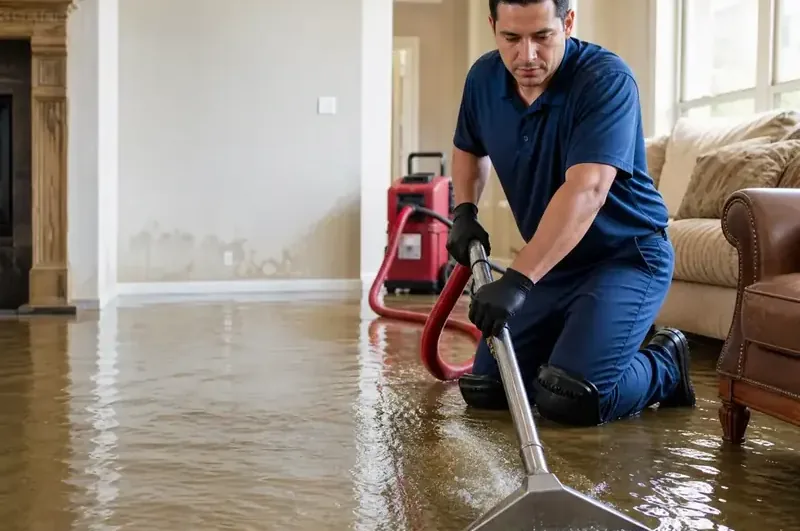
After several days of rain, water can sit against a house, in a garage or in a low room long after the storm has moved on.
Key takeaways
- Standing water soaks drywall and framing from the bottom edge, so removal should not wait for the yard to drain.
- In January 2020 recent rains left standing water all over Glenpool, and full creeks hid a water main break for hours.
- The city takes part in the National Flood Insurance Program and issues floodplain development permits.
- Public Works takes reports of water leaks and sewer backups.
- A humid climate slows drying, so equipment matters after the water is gone.
What the January 2020 break taught the city
In January 2020 an 8 inch city water main broke in a creek near Lambert Park.
Recent rains had left standing water all over Glenpool, and full creeks hid the break, so crews needed hours to find it.
Many areas went most of the weekend without proper running water, and the city called it one of the largest water issues it has had.
The lesson is that a wet year can hide problems in two places at once: the yard and the pipes.
- Rain can hide a leak outdoors as well as indoors.
- Water in the yard and water in the pipes can show up at the same time.
- Both need attention, but they need different fixes.
Where standing water goes
Water pooled against a slab or garage door finds the lowest gap. Under a door, through a cracked seal or along a floor drain, it slides in.
Once inside, it spreads under baseboards and into the bottom of drywall.
Garage floors take the first hit in many houses, since they sit lowest and have the biggest door gap.
Window wells, garage door thresholds and low doorways are the common entry points when water pools outside.
Signs water has already moved in
Look for dark carpet edges, a musty smell and drywall that feels soft near the floor.
Bubbling paint and swollen baseboards are signs the wall is wet behind the surface.
- Damp carpet along an exterior wall.
- Baseboards pulling away from the wall.
- Water stains that rise from the floor.
- Puddles that return after drying.
Signs to keep an eye on outdoors
A downspout that dumps beside the foundation or a patio that slopes toward the house sends rain where it should not go.
Water that sits for days in one spot means the ground is saturated and the next rain will go straight toward the house.
What gets pumped out first
The aim is to remove the bulk of the water before it soaks anything else.
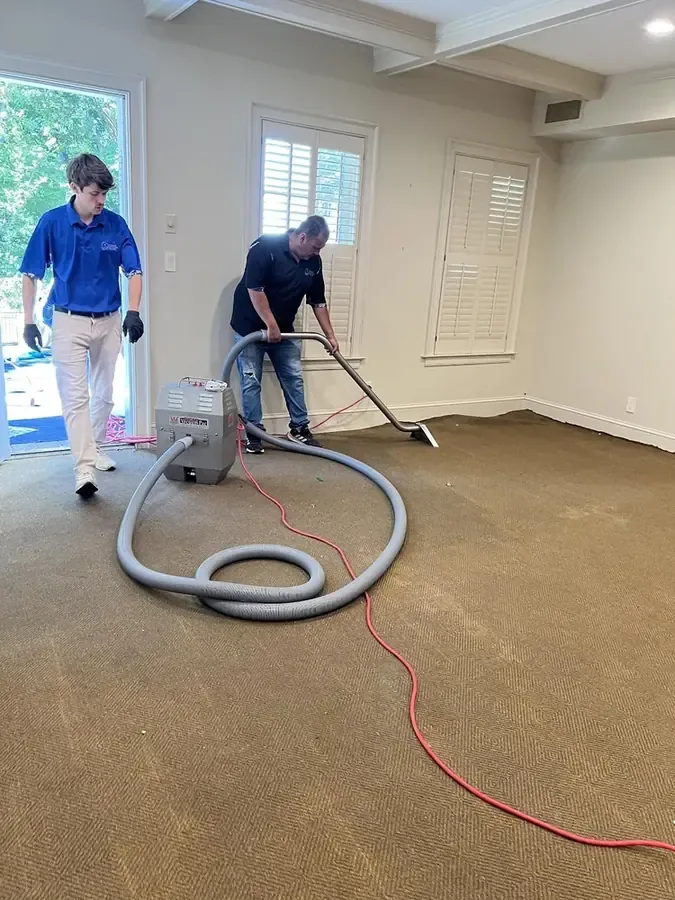
The water extraction work pulls standing water with pumps and wands, then the team checks floors and wall bases with a moisture meter.
Rainwater that comes in through a door seal may look clean, but it picks up dirt and fertilizer from the yard as it travels, so floors are cleaned after pumping.
Garage storage is often the first thing to suffer, since cardboard boxes act like sponges and hold water against the floor.
Lifting boxes onto shelves before a storm costs nothing and saves a lot of cleanup.
- Standing water on slabs, garage floors and ground level rooms.
- Water trapped in carpet and pad.
- Water under vinyl or laminate that has not dried.
When rain becomes a flood problem
If rainwater came in from outside and carries mud, it is treated as flood water and not just clean rain.
The city takes part in the National Flood Insurance Program through FEMA and issues floodplain development permits and flood map information, so Glenpool owners can look up how their property is mapped.
The Glenpool page for flood water cleanup shows how that cleanup is handled from pumping through sanitizing.
Mapped areas are not the only places water can reach. Ordinary heavy rain can bring water into a house that never appears on a flood map.
The practical step is to keep photographs and records of any water that enters, whether or not the home sits in a mapped area.
Reporting problems to the city
City Public Works takes reports of water leaks and sewer backups and has an after hours contact for sewer emergencies.
If the water in a yard looks like it is coming from a broken main and not from rain, a report helps crews find it.
Keeping a record of the date and time of each report helps if a repeat problem appears later.
- Water bubbling from the ground on a dry day.
- A sudden drop in water pressure at the house.
- Sewage smell near a yard drain.
Drying in a humid climate
Glenpool has a humid subtropical climate and lies in Tornado Alley, so the air is often already damp when the walls get wet.
That makes active drying with air movers and dehumidifiers the safe choice instead of leaving doors open and hoping.
Fans alone do not remove the moisture from wood framing and subfloors, which is why measured drying is used after a storm.
- Air movers push dry air across wet surfaces.
- Dehumidifiers pull moisture from the air so it does not settle back into wood.
- Daily readings show when the framing has dried.
Next steps and a ready kit for a wet house
A small kit makes a wet day easier: a flashlight, rubber boots, gloves, plastic bags and a phone with a charged battery.
Knowing where the water shutoff and the electrical panel are saves time when seconds count.
Photograph the water, shut off power to wet areas if it is safe, and remove small items from the floor.
Then get the standing water out quickly, because water extraction at the start decides how much has to be torn out later.
A short list on a phone helps when stress is high: shut off power to wet areas if it is safe, photograph, call, and keep a record of times.
- Know the water shutoff location.
- Move valuables off the floor in the garage.
- Keep gutters and downspouts clear and pointed away from the house.
- Keep a photo record of rooms while they are dry.
- Photograph the water and the waterline before moving anything.
- Keep family and pets out of the wet room.
- Note how the water entered, whether through a door, a window well or a drain.
- Save receipts for anything you buy to protect the house.
Questions
Why does water stand around a house after rain?
Saturated ground cannot absorb more water, so it pools against foundations and finds gaps. Several rainy days in a row make this worse.
Did the January 2020 break affect homes directly?
Many areas went most of the weekend without proper running water, and standing water from recent rains slowed crews as they searched for the break near Lambert Park.
Who do I report a water leak to?
City Public Works takes reports of water leaks and sewer backups, with an after hours contact for sewer emergencies.
Does the city have flood map information?
Yes. The city issues floodplain development permits and provides flood map information, and it takes part in the National Flood Insurance Program through FEMA.
Why does humid weather slow drying?
Damp air holds moisture that settles back into wood and drywall, so dehumidifiers and air movers do the work that open windows cannot.