Commercial Water Damage in Broken Arrow, OK
A pipe break or storm leak can stop a business for days. In Broken Arrow the crew extracts water, dries the building in stages and keeps operations moving wherever it can.
(888) 619-9509Business flooded? Call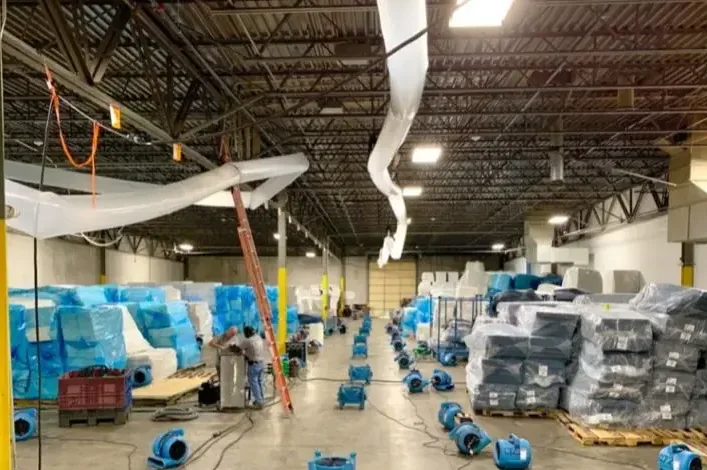
Why trained drying pros matter for this job in Broken Arrow
Rapid local response
Dispatch runs 24/7, and active water is treated as urgent at any hour, holidays and ice storm nights included.
IICRC S500 drying standard
Structural drying, not surface drying: air movers and LGR dehumidifiers sized to the class of loss and left until readings say dry.
Claim-ready documentation
Moisture maps, daily psychrometric logs and timestamped photos taken before any demolition go into the claim file.
Local water experts
River flood plain, creek runoff, hard freezes and storm-driven rain all shape how water gets into homes south of Tulsa.
First steps for commercial water damage right now
Commercial jobs run on a schedule, so the plan is agreed before any equipment is set.
- Walk the site. The crew tours the building with the manager, finds the water source and marks critical areas.
- Extract and secure. Large pumps clear standing water while electronics, records and stock are moved or protected.
- Stage the drying. Dehumidifiers and air movers are placed zone by zone so open areas can keep working.
- Document and report. Readings, photos and logs go to the manager and insurer in one organized file.
What does commercial water damage cost in Broken Arrow, OK?
Commercial water damage usually runs $3,000 to $25,000 or more. A small suite stays near the bottom, while a building-wide loss with several floors involved lands at the top.
Small suite
- One office or shop
- Extraction and drying
- Daily readings logged
Large floor
- Open floor area wet
- Staged drying zones
- Updates for the property manager
Building-wide
- Several floors involved
- Heavy equipment fleet
- Full claim documentation
Ranges are typical, not a quote: the water category, square footage, material class and how fast drying started move the number most.
How commercial water damage is handled in Broken Arrow, step by step
Emergency call
The dispatcher asks about the building type, the source of the water and which areas must stay open, then sends the crew with suitable equipment.
Site assessment
The crew meets the manager, scans for hidden moisture and sets priorities for contents, electronics and records.
Extraction and tear out
Water is removed with large pumps, and wet ceiling tiles, carpet and drywall are removed in sections.
Dry and close out
Equipment is staged, monitored and removed as zones dry, and the manager receives a summary of readings and photos.
A commercial loss is measured in downtime as much as in damage, and every extra day closed costs real money. The crew plans the work by zone so the dry areas of a building can keep operating while wet ones are extracted, opened and dried.
Workplaces across the city
The city's commercial base ranges from the Rose District Plaza beside Museum Broken Arrow to major employers such as FlightSafety International, the largest private employer, and the Tulsa Technology Center Broken Arrow Campus. Each kind of property has its own equipment and records to protect.
- Zones set up so open areas keep working
- Electronics, records and inventory protected first
- Large capacity pumps and dehumidifiers for big floors
- Written scope and daily logs for property managers
Water in the shop, office or plant? Tell the dispatcher what is open and what must stay dry. The crew builds a plan around the business.
Map out the buildingPlanning for downtime
The crew walks the building with the manager, agrees on which areas must stay open and schedules noisy or disruptive steps around business hours when possible. A clear plan keeps tenants informed and limits lost days. Deliveries, shifts and customer visits are worked around wherever the building allows.
Protect records and equipment first
Move computers, files and inventory off wet floors and away from ceiling leaks, and photograph them before and after. Switch off power only to wet areas and only when the panel is safely reachable. Property managers should save every receipt and notice, since insurers ask for them.
Documentation for claims
Commercial claims need detail. Photos, moisture logs, equipment records and lists of removed materials are compiled for insurers, landlords and property managers, so the claim reflects the work that was done. Contracts and lease terms often decide who pays for what, so a complete record helps everyone involved.
Commercial water damage across Broken Arrow and nearby towns
Rapid local response, 24/7, wherever the water got in.
Commercial dry-outs cover offices, shops, classrooms and plants throughout the city, including the downtown Rose District, Main Street and growing corridors such as Forest Ridge and the Creek Turnpike.
The same service nearby: commercial water damage in Bixby, Coweta, Jenks.
Water damage restoration in Broken ArrowRelated water damage services in Broken Arrow
Commercial Water Damage questions, answered
Still dealing with the water?
Business water damage? Tell the dispatcher what is wet and the crew stages the dry-out.
(888) 619-9509 Start the business planCan a business stay open during drying?
Often, yes. Zones are isolated so unaffected areas keep working, and noisy steps can be scheduled around business hours when the site allows it.
How are records and electronics protected?
They are moved off wet floors, covered or relocated first, and photographed so the claim reflects their condition. The manager decides what stays and what goes.
Does the crew work with property managers?
Yes. The crew shares scope, daily logs and photos with managers, landlords and insurers, so everyone works from the same record.
What affects commercial pricing?
Square footage, the type of water, the number of floors and the materials involved. A small suite runs $3,000 to $7,000, a large floor $7,000 to $15,000 and a building-wide loss $15,000 to $25,000 or more.
Is sewage handled in commercial spaces?
Yes. Contaminated water follows the same safety steps as in homes, with sealed work zones, protective gear, removal of porous materials and disinfection.
Does a commercial dry-out take longer than a home?
It can, because floors are larger and materials are denser. Staged drying lets the crew finish zone by zone, and readings decide when equipment comes out.
Get the building dry and operating
Downtime costs money. The crew extracts, dries in zones and documents every step for managers and insurers.
(888) 619-9509Call about the building