Water Extraction and Removal in Broken Arrow, OK
When rain, a failed pipe or a backed up drain leaves water on the floor of a Broken Arrow home, the crew pumps it out, lifts what is soaked and starts drying, any hour.
(888) 619-9509Get the pumps rolling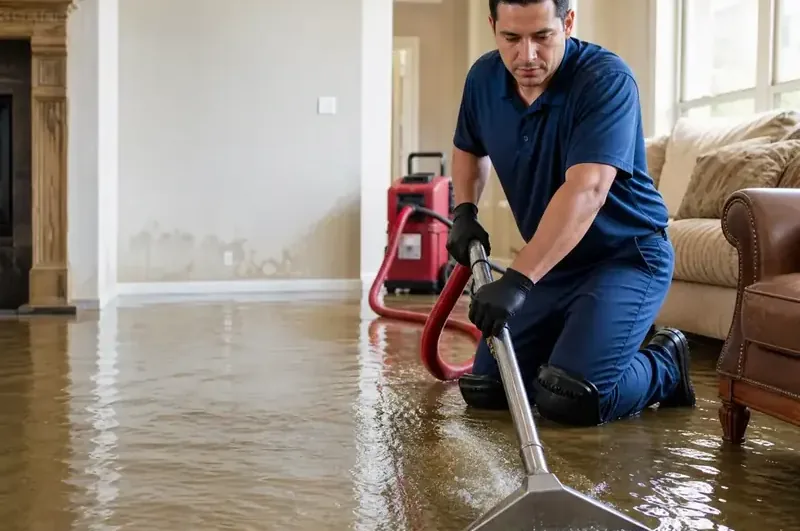
Why trained drying pros matter for this job in Broken Arrow
Rapid local response
Dispatch runs 24/7, and active water is treated as urgent at any hour, holidays and ice storm nights included.
IICRC S500 drying standard
Structural drying, not surface drying: air movers and LGR dehumidifiers sized to the class of loss and left until readings say dry.
Claim-ready documentation
Moisture maps, daily psychrometric logs and timestamped photos taken before any demolition go into the claim file.
Local water experts
River flood plain, creek runoff, hard freezes and storm-driven rain all shape how water gets into homes south of Tulsa.
First steps for water extraction and removal right now
Water that stays put keeps moving into the floor system, so extraction follows a tight order of work, listed below.
- Find the water. The crew checks every room for pooled and hidden water, shuts off the source if needed and notes which finishes are soaked.
- Pump it out. Pumps clear deep water first, then wands work the floors until little more can be pulled up.
- Sort the wet. Carpet, pad, trim and drywall are judged one by one, and the ones that cannot dry in place come out.
- Set up drying. Air movers and dehumidifiers go in, readings are logged, and the schedule for return visits is explained.
What does water extraction and removal cost in Broken Arrow, OK?
Water extraction usually runs $1,200 to $5,500 or more. One wet room sits near the bottom, a full floor near the top, and sewage or flood water moves every figure higher.
One room
- Clean water in one room
- Pump-out and a wand pass
- Short equipment run
Several rooms
- Water across a hallway
- Pad and trim removed
- Drying over several days
Whole floor
- Level wide water spread
- Drywall flood cuts made
- Multiple equipment sets
Ranges are typical, not a quote: the water category, square footage, material class and how fast drying started move the number most.
How water extraction and removal is handled in Broken Arrow, step by step
Dispatch
A call reaches the crew any hour, and the dispatcher gathers the basics: where the water is, what caused it and whether power is on.
Extraction
Technicians bring pumps and wands, clear the standing water and mark the wet areas on the floor so the drying plan has a map.
Removal
Carpet, pad and damaged trim come out where they cannot be saved, and the homeowner approves what is removed before it is discarded.
Handoff
Drying equipment is set, readings are recorded and the next steps are explained, with structural drying picking up from there.
Water extraction is the first job on any serious leak or flood, and what happens in it decides how much of the house has to be torn out later. The sooner the surface water is gone, the less of it soaks into the building.
How standing water is removed
Large volumes go to truck mounted or portable pumps, while extraction wands work the water out of carpet, pad and low spots along the floor. The crew keeps the pumps moving until a wand pass pulls up almost nothing, then checks the room with a moisture meter.
- Pumps for ponded water in rooms, garages and utility spaces
- Wands that lift water out of carpet and padding
- Moisture meters that show where water traveled beneath the surface
- A quick call on which materials can stay
Water on the floor and still rising? Pumps and wands are loaded, and a ready crew can begin planning the pump-out the moment someone calls.
Get a pump-out planWhen extraction comes first
In May 2006, up to 7 inches of rain fell in about 3 hours and flooded 44 homes in the city, the kind of event where pump-out has to come before anything else. Water that sits will wick up into drywall, cabinet bases and subfloors, and a pump-out that starts early can decide whether a wall is dried in place or cut out. Garages, utility rooms and low spots collect the water first, so the crew starts there.
Cut the power before wading in
Water and electricity are a dangerous mix. If outlets, cords or appliances are in the water, leave the breaker alone unless the panel is dry and easy to reach, and call an electrician if there is any doubt. Standing water also hides sharp debris, so wear boots and keep children and pets out of the room until the crew has cleared it.
What happens after the water is gone
Removing the visible water is only half of the job. Wet carpet and pad are often lifted, baseboards are pulled so air can reach the wall bottoms, and drywall that has wicked water upward may be cut at a flood mark. Air movers and dehumidifiers then take over, which is covered under structural drying. Clean water caught fast usually saves more of the house than water left standing overnight. The crew also logs the starting moisture readings, which later show the adjuster how far the water traveled.
Water extraction and removal across Broken Arrow and nearby towns
Rapid local response, 24/7, wherever the water got in.
Extraction crews cover every part of the city, from the Rose District and Main Street to newer subdivisions near Forest Ridge and the Creek Turnpike, in both Tulsa and Wagoner counties.
The same service nearby: water extraction and removal in Bixby, Coweta, Jenks.
Water damage restoration in Broken ArrowRelated water damage services in Broken Arrow
Water Extraction and Removal questions, answered
Still dealing with the water?
Water standing in a room? Describe it to the dispatcher and the pump-out plan starts forming.
(888) 619-9509 Arrange the pump-outHow quickly does standing water damage a floor?
Water begins moving into carpet pad, trim and drywall almost immediately, and hardwood can cup as it absorbs moisture. Mold can start in the 24 to 48 hour window, so pumping out early limits the damage and the cost.
Can a wet carpet be saved after extraction?
Often yes when the water was clean and the carpet is lifted and dried quickly. The pad usually goes because it holds water like a sponge. Contaminated water changes that, and the carpet is removed.
Does the crew remove water from garages and utility rooms?
Yes. Pumps handle ponded water in garages, mechanical rooms and low spots just as they do inside living areas, and the same moisture checks follow to see what the concrete and walls still hold.
What does water extraction cost for one room?
One room usually falls between $1,200 and $2,200 when the water is clean and the loss is caught early. Several rooms run $2,200 to $4,000, and a whole floor $4,000 to $5,500 or more.
Is extraction different after a creek flood?
Yes. Creek and storm water carries silt and bacteria, so the crew uses protective gear, removes porous materials and disinfects. Parts of the Haikey Creek and Battle Creek drainageways sit in FEMA flood hazard areas.
Should the water be shut off before the crew gets there?
If a pipe or appliance is the source, closing the main valve or the local shutoff helps. If the source is unclear, the crew can trace it, and a plumber handles the repair.
Does extraction replace structural drying?
No. Extraction removes the water that can be pumped or wanded, while structural drying removes the moisture left inside framing, subfloors and wall cavities. Most jobs need both, one right after the other.
Get the water out of the house
Standing water does more harm with every passing hour. The crew extracts, sorts the wet materials and sets up drying around the clock.
(888) 619-9509Call for extraction