Water Extraction in Coweta, OK
Standing water seeps into drywall, carpet pad and subfloor faster than most people expect. Crews pull it out with powerful extractors, then hand the room to drying equipment so the damage stops growing.
(888) 619-9509Send an extraction crew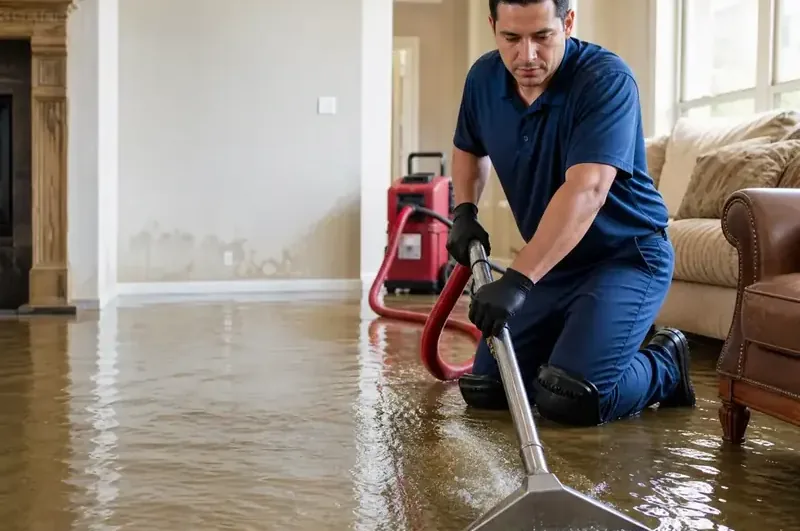
Why trained drying pros matter for this job in Coweta
Rapid local response
Dispatch runs 24/7, and active water is treated as urgent at any hour, holidays and ice storm nights included.
IICRC S500 drying standard
Structural drying, not surface drying: air movers and LGR dehumidifiers sized to the class of loss and left until readings say dry.
Claim-ready documentation
Moisture maps, daily psychrometric logs and timestamped photos taken before any demolition go into the claim file.
Local water experts
River flood plain, creek runoff, hard freezes and storm-driven rain all shape how water gets into homes south of Tulsa.
First steps for water extraction and removal right now
Extraction starts by locating where the water sits, how deep it is and whether the power can safely stay on.
- Find the source. Shut off the supply, valve or appliance so nothing new enters the room, and note what failed for the file.
- Extract. Pumps and wands remove pooled water from floors, carpet and padding, working from the lowest point of the room outward.
- Check moisture. Meters and thermal cameras show where water traveled into walls, baseboards and subfloor out of sight.
- Hand off to drying. Air movers and dehumidifiers continue the work until readings are normal and the crew can document the finish.
What does water extraction and removal cost in Coweta, OK?
A single wet room usually runs $1,200 to $2,200 for extraction, while larger floors climb toward $5,500 or more depending on how far the water spread and how many materials it reached.
One room
- One wet room
- Pump and wand
- Basic moisture check included
Several rooms
- Water in hallways
- Pad removed
- Drying equipment placed after
Whole floor
- Full level soaked
- Heavy removal
- Extended monitoring
Ranges are typical, not a quote: the water category, square footage, material class and how fast drying started move the number most.
How water extraction and removal is handled in Coweta, step by step
Dispatch and safety
Dispatch records the source and which rooms are wet, and the crew confirms electrical safety before stepping into standing water.
Water removal
Extractors pull the bulk of the water, then handheld wands clear edges, stairs and spaces beneath furniture and cabinets.
Material decisions
Carpet pad and soaked drywall that cannot dry in place are cut out, while salvageable flooring stays and gets treated.
Documentation
Photos and readings are saved so the insurance file shows the water level, the removal work and the drying plan.
Coweta is a fast-growing Tulsa suburb, and about 69.4% of its occupied homes are owner occupied, so most water losses land on people who need the floors, walls and budget protected at once. Pulling the water out first makes everything after it cheaper.
What extraction removes
Extraction is the first physical step once the leak is stopped. A truck mounted unit or portable pump draws water from tile, hardwood, carpet and the pad beneath it, while a hand wand works along edges and under furniture. Water left standing keeps wicking up the walls, and a thin film across a large floor can hold more moisture than a deep puddle in one corner.
- Pooled water on hard floors and tile
- Soaked carpet and cushion pad
- Water trapped under cabinet toe kicks
- Standing water in garages and utility rooms
- Water pooled around a failed washer or water heater
Water standing in a room right now? Extraction crews can start removing it and protect the floors, walls and belongings around it while the source is dealt with.
Send a crew with pumpsWhy speed matters
Drywall behaves like a sponge and wood floors cup as they absorb moisture. Every hour of standing water adds material that must be torn out instead of dried, which raises the final bill and stretches out the disruption to the household. Hardwood is a good example, since boards that stay wet for long can buckle and lose the finish, while boards extracted early can often be dried in place.
Hidden moisture stays behind
Dry floors can still hide wet drywall, insulation and subfloor underneath. Skipping the meter check after extraction is how a repaired room develops damp walls and odors a few weeks later, so the reading step always follows the pumps, and the homeowner receives those numbers in writing for the claim file.
What happens after the water is gone
Removing the visible water is not the same as drying the building, and many repeat problems begin when a crew stops at the pumps. Moisture meters and thermal cameras check walls, subfloor and flooring edges, then air movers and dehumidifiers take over. The crew also records readings so the claim file shows the starting point. Linking extraction to structural drying keeps the process complete, and a homeowner can ask the crew to explain each reading in plain language.
Water extraction and removal across Coweta and nearby towns
Rapid local response, 24/7, wherever the water got in.
Extraction crews work across Coweta, from older homes near the creek to newer subdivisions like The Woods and along Highway 51 and Broadway, including garages, kitchens, laundry rooms and living rooms of any size.
The same service nearby: water extraction and removal in Bixby, Broken Arrow, Jenks.
Water damage restoration in CowetaRelated water damage services in Coweta
Water Extraction and Removal questions, answered
Still dealing with the water?
Water pooled on your floor? Extraction crews are one call away.
(888) 619-9509 Request extraction helpWhat is water extraction?
It is the removal of standing water with pumps and vacuums so the floor and walls can start drying. It comes before dehumidifiers and air movers, and it removes the largest share of the moisture in the building.
Can wet carpet be saved?
Often yes if the water was clean and extraction began quickly. Contaminated water means the pad and sometimes the carpet should be discarded, and the crew explains which applies.
Do I need extraction if the water looks gone?
Yes. Water soaks into pad, subfloor and wall bottoms, and meters find moisture that sight and touch miss. Skipping the check is how hidden dampness turns into odors later.
How long does extraction take?
A small room can be cleared in a short visit, while larger floors need more passes and longer pump time before drying equipment begins, though the crew tells you the plan on arrival.
Is it safe to walk in the water?
Not until the power to the room is off. Wet areas near outlets and cords can carry current, so the crew checks first and may leave breakers off in the wet rooms until the job is done.
Will extraction stop mold?
It lowers the risk, but the 24 to 48 hour window still matters, so drying should follow right behind it, with dehumidifiers running as soon as the pumps are done.
Does insurance cover extraction?
Sudden losses are often covered. The crew records water levels and removal work in photos so the adjuster has what is needed, including the cause and the extent of the wet area.
Pull the water out before it spreads
Fast extraction protects drywall, flooring and the budget. Dispatch is staffed all night for floors that cannot wait for morning.
(888) 619-9509Start the extraction