Structural Drying in Coweta, OK
Removing visible water does not dry a building. Crews use air movers, dehumidifiers and daily moisture readings to dry framing, drywall and subfloor until they match a dry reference.
(888) 619-9509Start structural drying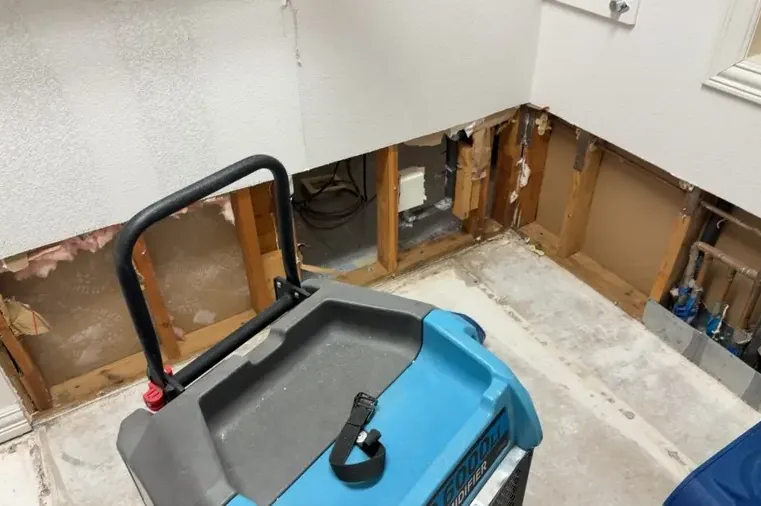
Why trained drying pros matter for this job in Coweta
Rapid local response
Dispatch runs 24/7, and active water is treated as urgent at any hour, holidays and ice storm nights included.
IICRC S500 drying standard
Structural drying, not surface drying: air movers and LGR dehumidifiers sized to the class of loss and left until readings say dry.
Claim-ready documentation
Moisture maps, daily psychrometric logs and timestamped photos taken before any demolition go into the claim file.
Local water experts
River flood plain, creek runoff, hard freezes and storm-driven rain all shape how water gets into homes south of Tulsa.
First steps for structural drying and dehumidification right now
Structural drying starts with readings that show where moisture sits and how deep it goes.
- Take readings. Meters and thermal cameras map moisture across walls, floors and ceilings, and a baseline is logged.
- Set equipment. Air movers and dehumidifiers are placed to match the class of damage and the size of the room.
- Check daily. Readings are repeated each visit and equipment is moved or removed as areas reach their targets.
- Confirm dry. Equipment is removed once walls and floors meet the dry reference points set at the start.
What does structural drying and dehumidification cost in Coweta, OK?
Structural drying usually costs $1,000 to $6,000 or more, based on the class of damage, the area involved and the number of days the equipment runs.
Class 1 or 2
- Small affected area
- Few air movers used
- Short drying time
Class 3
- Ceilings and walls wet
- More dehumidifiers
- Several days drying
Class 4
- Deep saturation
- Specialty equipment
- Extended drying visits
Ranges are typical, not a quote: the water category, square footage, material class and how fast drying started move the number most.
How structural drying and dehumidification is handled in Coweta, step by step
Initial survey
The crew records temperature, humidity and moisture readings in each wet room to set the class and target.
Equipment layout
Air movers, dehumidifiers and any injection or mat systems are positioned to dry every wet surface efficiently.
Daily monitoring
Readings are taken on a schedule and written into the log, and equipment is moved, added or removed as areas reach dry targets.
Final check and file
A last round of readings confirms dry conditions, and the full log goes into the claim documents.
After a water loss, wet framing, drywall and subfloor must be dried completely. Construction types in Coweta are not confirmed, so the advice stays general and describes how drying works in any house.
How drying works
Drying is a balance of air movement, warmth and dehumidification. Air movers push dry air across wet surfaces, which lifts moisture into the room. Dehumidifiers then remove that vapor so it does not settle back into the walls. Without both, the building stays humid even after the surfaces feel dry. Warm, moving air dries faster than still air, so the room stays closed while equipment runs.
- Air movers speed up evaporation
- LGR dehumidifiers remove vapor
- Injection tools reach wall cavities
- Meters track progress each day
Walls and floors still damp after the water is gone? A crew can set up controlled drying and track it with readings.
Get equipment set upClasses of water damage
The S500 standard sorts losses by class, from slow evaporating Class 1 up to Class 4 for deep saturation in materials like hardwood or concrete. The class sets how many dehumidifiers and air movers the room needs. A Class 4 job may use specialty low grain equipment and longer run times. Classes are separate from categories, which describe how clean the water was.
Dry to the touch is not dry
Surfaces feel dry long before the framing and subfloor are. Meter readings are the only way to know the structure is truly dry, which is why equipment stays until the numbers say so and not until the room just feels comfortable.
When drying is finished
Equipment stays until the readings match a dry reference taken from an unaffected part of the home. Removing it early can leave moisture in the framing, which invites the 24 to 48 hour mold window to reopen. For the water removal that comes first, see water extraction. The homeowner can ask to see the final readings.
Structural drying and dehumidification across Coweta and nearby towns
Rapid local response, 24/7, wherever the water got in.
Structural drying runs in homes across Coweta after any kind of water loss, from supply pipe leaks to storm water, in rentals, owner occupied houses and small businesses.
The same service nearby: structural drying and dehumidification in Bixby, Broken Arrow, Jenks.
Water damage restoration in CowetaRelated water damage services in Coweta
Structural Drying and Dehumidification questions, answered
Still dealing with the water?
Need a building dried completely? Ask a crew about structural drying.
(888) 619-9509 Request drying gearHow long will equipment run?
Most jobs take several days, though readings decide the real finish. Thick materials and humid weather can add a day or two.
Is the equipment loud?
Dehumidifiers and air movers make noticeable noise, similar to large fans, and they run around the clock until the structure is dry.
Will my power bill rise?
Yes, modestly, and some insurers cover it. The crew can record run times and equipment counts to support that part of the claim.
Can I use my own fans?
Household fans move air but do not remove moisture the way dehumidifiers do, so they cannot replace a full drying setup.
What are the classes?
They describe how much water the materials absorbed and how fast it will evaporate, from light to deep saturation.
Can the equipment be turned off early?
Not safely. Turning it off before the structure is dry risks hidden moisture, odors and growth inside the walls.
What is a dry reference?
It is a reading from an unaffected area of the same material, used as the target for every wet room.
Do I need drying if the floor looks fine?
Yes. A dry looking floor can sit over wet subfloor, and meters are the only reliable test.
Dry the structure to the target
Framing and subfloor hold water long after the surface feels dry. Dispatch stays open to schedule drying at any hour.
(888) 619-9509Schedule the drying