Structural Drying and Dehumidification in Broken Arrow, OK
Pumping out the water is only the start. In Broken Arrow, structural drying uses dehumidifiers and air movers to pull moisture from framing, subfloors and wall cavities until meter readings show everything is dry.
(888) 619-9509Ask about drying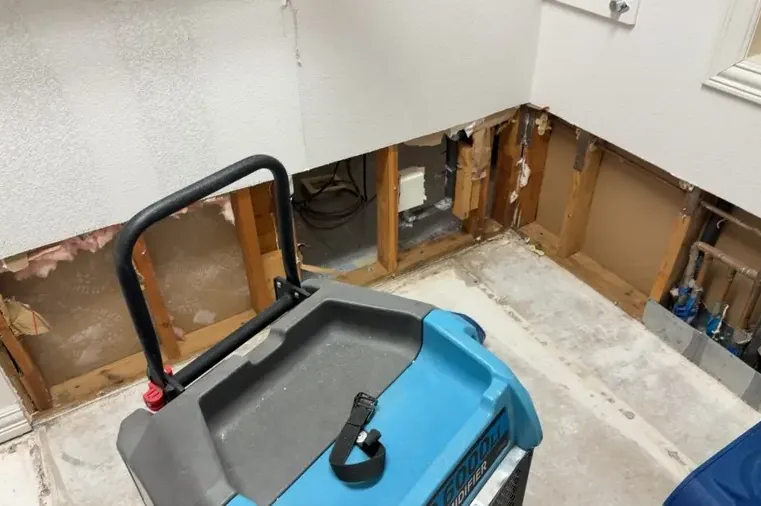
Why trained drying pros matter for this job in Broken Arrow
Rapid local response
Dispatch runs 24/7, and active water is treated as urgent at any hour, holidays and ice storm nights included.
IICRC S500 drying standard
Structural drying, not surface drying: air movers and LGR dehumidifiers sized to the class of loss and left until readings say dry.
Claim-ready documentation
Moisture maps, daily psychrometric logs and timestamped photos taken before any demolition go into the claim file.
Local water experts
River flood plain, creek runoff, hard freezes and storm-driven rain all shape how water gets into homes south of Tulsa.
First steps for structural drying and dehumidification right now
Drying is measured, not guessed, so each visit follows the same checks before equipment is moved or stopped.
- Set a dry goal. Readings from unaffected materials set the target that the wet areas must reach before work can stop.
- Place the equipment. Dehumidifiers and air movers go where the moisture map shows the most water in the structure.
- Return and measure. Each visit records readings, adjusts airflow and moves equipment as individual areas dry out.
- Confirm and stop. Equipment is removed only after every reading reaches the goal, and the results are written down.
What does structural drying and dehumidification cost in Broken Arrow, OK?
Structural drying alone usually runs $1,000 to $6,000 or more. Class 1 or 2 losses stay near the bottom, while Class 4 jobs with deep wet materials land at the top.
Class 1 or 2
- Only a small wet area
- Few wet materials involved
- Short equipment run
Class 3
- Water came from above
- Walls and insulation wet
- Several equipment days
Class 4
- Deep wet materials involved
- Hardwood or concrete
- Specialty drying gear
Ranges are typical, not a quote: the water category, square footage, material class and how fast drying started move the number most.
How structural drying and dehumidification is handled in Broken Arrow, step by step
Moisture survey
The crew maps wet areas with meters and a thermal camera, records starting readings from dry materials and writes the drying plan.
Equipment setup
Dehumidifiers and air movers are sized and placed to match the wet volume, with doors and vents arranged to keep moisture in the drying zone.
Monitoring visits
The crew returns to read the same spots, shift equipment and open further areas if hidden moisture shows up.
Completion
Equipment comes out when readings hit the goal, and the final report lists readings, equipment days and photos.
Structural drying removes the moisture that pumps cannot reach: the water inside studs, plates, subfloors and wall cavities. Done well, it saves materials that would otherwise be torn out, and it protects the building from lingering damp.
How the equipment works
LGR dehumidifiers pull moisture out of the air so the wet materials can release more water into it. Air movers keep fresh, dry air moving across wet surfaces. Together they turn a damp room into a drying chamber, and the crew adjusts the setup at each visit.
- Dehumidifiers sized to the volume of the wet space
- Air movers aimed along floors and wall bottoms
- Moisture meters checked in the same spots each visit
- Equipment moved or removed as areas reach dry
Water pumped out but the walls still feel damp? That moisture needs equipment and readings, not time alone. The crew sets up and tracks the drying.
Size up the dryingDrying to a goal
The S500 standard sets how wet materials are assessed and dried. The crew compares readings to unaffected parts of the building and keeps equipment running until the wet areas match them. That is why a surface that feels dry can still need more time, and why stopping early is a common cause of later trouble.
Why fans alone fall short
Household fans move air but cannot remove water from it, so humidity climbs and slows drying. Dehumidifiers pull that moisture out and carry it away. A closed room with dehumidifiers and air movers dries far faster than an open one with fans, and readings prove when it is done.
Why it matters after floods
After the May 2006 flooding, homeowners had to rip out low drywall and dry out walls and floors, exactly the work structural drying does. Drying also lowers the odds of mold in the 24 to 48 hour window and keeps wood from warping. It is the step that turns a cleaned house back into a sound one.
Structural drying and dehumidification across Broken Arrow and nearby towns
Rapid local response, 24/7, wherever the water got in.
Structural drying serves homes and businesses across the city, from the Rose District and Main Street to Forest Ridge, South Broken Arrow and neighborhoods near the Creek Turnpike, in Tulsa and Wagoner counties.
The same service nearby: structural drying and dehumidification in Bixby, Coweta, Jenks.
Water damage restoration in Broken ArrowRelated water damage services in Broken Arrow
Structural Drying and Dehumidification questions, answered
Still dealing with the water?
Water gone but the walls still wet? Describe the damage and the crew plans the drying.
(888) 619-9509 Set the drying goalHow long does structural drying take?
Most jobs run several days, with longer times for hardwood, concrete and thick wall assemblies. Readings decide when to stop, not the calendar.
Why are dehumidifiers needed as well as fans?
Fans move air, but dehumidifiers remove the moisture from it. Without them humidity rises and wet materials stop releasing water, which slows drying and invites mold in the 24 to 48 hour window.
What do the water damage classes mean?
Class 1 and 2 involve limited wet materials, Class 3 means water came from above and soaked insulation and walls, and Class 4 covers deep, dense materials such as hardwood or concrete.
Can the equipment run overnight?
Yes. Drying equipment runs around the clock, and the noise is steady rather than loud. The crew explains power use up front so the household knows what to expect.
What does structural drying cost?
Class 1 or 2 runs $1,000 to $2,500, Class 3 $2,500 to $4,500 and Class 4 $4,500 to $6,000 or more. Drying is often part of a larger water damage job.
How is dry confirmed?
Readings from the affected materials are compared with those from unaffected areas, and equipment stays until they match. The final report lists readings and equipment days for the adjuster.
Dry the structure, not just the surface
Moisture hidden in framing and subfloors causes trouble later. The crew sets equipment, tracks readings and confirms dry before it leaves.
(888) 619-9509Broken Arrow drying help