Water Heater Leak Cleanup in Sapulpa, OK
A failing tank can release dozens of gallons into a closet, hallway or garage, soaking floors and wall bottoms. Crews extract the water, check surrounding rooms and dry the space with measured readings.
(888) 619-9509Heater leaking? Call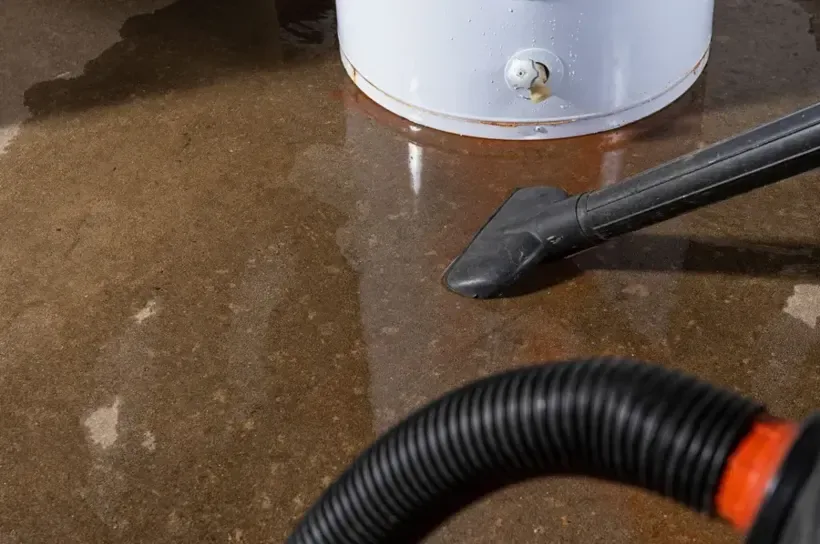
Why trained drying pros matter for this job in Sapulpa
Rapid local response
Dispatch runs 24/7, and active water is treated as urgent at any hour, holidays and ice storm nights included.
IICRC S500 drying standard
Structural drying, not surface drying: air movers and LGR dehumidifiers sized to the class of loss and left until readings say dry.
Claim-ready documentation
Moisture maps, daily psychrometric logs and timestamped photos taken before any demolition go into the claim file.
Local water experts
River flood plain, creek runoff, hard freezes and storm-driven rain all shape how water gets into homes south of Tulsa.
First steps for water heater leak cleanup right now
Water heater cleanup runs in these steps, starting at the shutoff valve and ending with dry readings.
- Shut off supply and power. The heater's water inlet and its power source are closed so nothing adds to the flood.
- Extract the water. Wands and pumps remove tank water from the floor, closet and hallway.
- Dry floors and walls. Wet flooring is lifted, and equipment dries the subfloor and wall bottoms.
- Check neighbors and record. Adjacent rooms are metered for hidden water, and the loss is documented.
What does water heater leak cleanup cost in Sapulpa, OK?
A leak confined to a garage floor often costs $1,000 to $1,800 to dry, and one that reached several rooms can run $4,500 or more.
Garage floor only
- Concrete floor wet
- Short extraction
- Quick drying
Closet and hallway
- Carpet or planks lifted
- Wall bottoms dried
- Pad replaced
Several rooms
- Water spread widely
- Walls opened
- Extended drying
Ranges are typical, not a quote: the water category, square footage, material class and how fast drying started move the number most.
How water heater leak cleanup is handled in Sapulpa, step by step
Control the source
The crew confirms the heater is isolated, and a plumber is looped in for repair or replacement.
Pull out the water
Extraction removes the water, and wet pad or baseboards are taken out if they cannot be dried.
Dry beyond the closet
Equipment runs in rooms the water reached, with attention on cabinets and wall bottoms nearby.
Report the loss
Photos of the unit, the wet area and the readings are collected so the adjuster can check the claim.
Water heaters hold a lot of water, and when a tank or connection fails it can empty onto the floor. Even a slow drip from a fitting can soak baseboards and flooring over days.
What gets wet
Water runs out of the closet or garage corner and travels along the floor, soaking carpet, wall bottoms and anything stored nearby. In a garage, drywall and stored boxes soak up water from the floor.
- Closet flooring and baseboards
- Carpet or hallway flooring nearby
- Garage drywall and stored items
- Adjoining room walls
Water pooling under the heater? Turn off the supply and the power to it, then call. Quick extraction keeps the water from reaching neighboring rooms.
Send a dry-out crewShut it down first
The water supply to the heater and its power or gas should be turned off at the shutoff valves before cleanup begins. A plumber then handles repair or replacement, so new water does not add to the loss.
Check around the heater, not just under it
Water from a tank travels. Look at the carpet in nearby rooms, the base of walls and anything stored in the garage, since damp spots there can run longer than the puddle by the heater. A thermal camera picks up cool damp patches the eye misses.
Cleanup and drying
The crew extracts the water and lifts flooring that cannot be dried. Air movers and dehumidifiers are set in the closet, hall and neighboring rooms, and meters track progress. The records go to the insurer with photos of the failed unit.
Replacing the heater safely
After the water is controlled, a plumber replaces or repairs the unit, and the floor is checked again once the new heater is running. Drain pans, shutoff valves that are easy to reach and occasional checks of the fittings catch most failures early. The drying stage uses the same structural drying methods used elsewhere, and a leak that reached the carpet may also involve the water extraction step.
Water heater leak cleanup across Sapulpa and nearby towns
Rapid local response, 24/7, wherever the water got in.
Water heater cleanups take place in garages, utility closets and hallways of homes across the city, including areas near downtown and in the outer neighborhoods. Garage and utility closet jobs are routine.
The same service nearby: water heater leak cleanup in Bixby, Glenpool, Jenks.
Water damage restoration in SapulpaRelated water damage services in Sapulpa
Water Heater Leak Cleanup questions, answered
Still dealing with the water?
Water heater leaking? Get the floor dried before it spreads.
(888) 619-9509 Dry the heater leak areaHow much water can a water heater release?
A full tank holds dozens of gallons, enough to flood a closet and spread into the hallway or garage within a short time.
Should I turn off the heater?
Yes. Close the water supply to it and cut its power or gas, then call a plumber to inspect the unit.
Does insurance cover a water heater leak?
Sudden leaks are commonly covered, but the heater itself and long-term leaks may not be. The adjuster checks the policy.
Can carpet near the closet be saved?
Often if the water was clean and removed fast. The pad underneath is typically replaced.
How long does drying take?
Typically three to five days, depending on how many rooms were reached and what the floors are made of.
Could a slow leak hide behind the heater?
Yes. A dripping fitting can soak wall bottoms for weeks, so meters check the wall and floor around the unit.
Who replaces the heater?
A plumber does. The restoration crew handles the water and drying, and the two can coordinate on timing.
How old is too old for a water heater?
Tanks wear out over time, and rust, puddles or rumbling sounds suggest it is failing. A plumber can judge whether to repair or replace.
Dry out after the heater failure
One call sends extraction tools and dryers, so the closet, hall and garage dry before baseboards swell.
(888) 619-9509Call the heater crew