Structural Drying and Dehumidification in Glenpool, OK
Wet framing, subfloors and concrete dry slowly on their own, especially in humid weather. The crew uses air movers, dehumidifiers and daily readings to bring every material to its dry goal.
(888) 619-9509Get the structure dry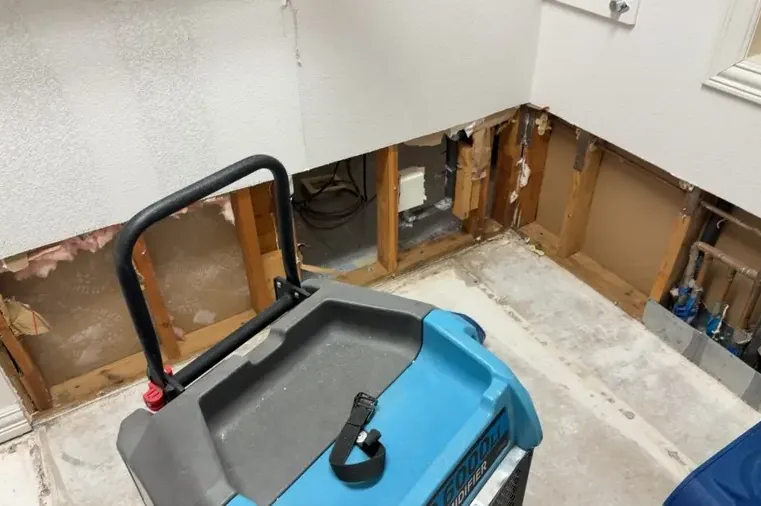
Why trained drying pros matter for this job in Glenpool
Rapid local response
Dispatch runs 24/7, and active water is treated as urgent at any hour, holidays and ice storm nights included.
IICRC S500 drying standard
Structural drying, not surface drying: air movers and LGR dehumidifiers sized to the class of loss and left until readings say dry.
Claim-ready documentation
Moisture maps, daily psychrometric logs and timestamped photos taken before any demolition go into the claim file.
Local water experts
River flood plain, creek runoff, hard freezes and storm-driven rain all shape how water gets into homes south of Tulsa.
First steps for structural drying and dehumidification right now
Structural drying works best when the building is closed up and left alone. A few habits help.
- Keep doors closed. Closed rooms hold the dry air that dehumidifiers create. Closed doors hold dry air in.
- Leave equipment running. Fans and dehumidifiers should run around the clock until the crew removes them.
- Do not move gear. Equipment is placed by measurements, so leave positions alone. Notes track each room.
- Report problems. Tell the crew about tripped breakers or odd noises right away.
What does structural drying and dehumidification cost in Glenpool, OK?
Structural drying in Glenpool commonly costs $1,000 to $2,500 for class 1 or 2 losses and $4,500 to $6,000 or more for class 4. The class depends on how much water the materials absorbed.
Class 1 or 2
- Light to moderate wetness
- Standard equipment
- A few days of drying
Class 3
- Water from above
- Ceilings and walls wet
- Added dehumidifiers
Class 4
- Dense materials soaked
- Specialty drying
- Extended monitoring
Ranges are typical, not a quote: the water category, square footage, material class and how fast drying started move the number most.
How structural drying and dehumidification is handled in Glenpool, step by step
Classify and plan
The crew classifies the water and the loss and calculates the equipment needed for each room. Room volumes and wet areas drive the numbers.
Set the equipment
Air movers and LGR dehumidifiers are placed and sealed rooms are prepared for efficient drying. Doors and vents are sealed where needed.
Monitor daily
Readings are logged each visit and equipment is adjusted as materials dry.
Confirm dry goals
Equipment comes out once every material meets its target, and a final report is prepared. Equipment leaves only after final checks.
Structural drying is the long middle of a water loss. After the water is out, the building still holds moisture in wood, drywall and concrete, and removing it takes controlled airflow and dehumidification.
Why humid weather matters
Glenpool has a humid subtropical climate, with a yearly average temperature around 60 degrees Fahrenheit, so damp air is common much of the year. Wet materials can stay wet when the air outside holds its own moisture, which is why active drying is needed.
- Wet framing and subfloors
- Soaked drywall and insulation
- Damp concrete floors
- Hardwood and cabinet bases
Building still damp after the water is out? Tell the crew what is wet and the plan comes together from there.
Start a dry planHow the equipment works
Air movers push dry air across wet surfaces, and LGR dehumidifiers pull the released moisture out of the air and carry it away. The two work together, so rooms are closed off and equipment is set according to the S500 standard.
Dry does not mean it feels dry
Drywall can feel dry on the surface while the studs behind it hold water. Wet wood left in place invites mold within 24 to 48 hours and swells over time. Meters read inside materials, so the crew can prove the structure is dry instead of guessing.
Readings decide when it ends
Moisture meters and humidity readings are taken at each visit and compared against dry goals. Equipment is adjusted or moved when a spot lags. The job ends only when every material meets its standard, and the log goes into the insurance file.
Drying after specific losses
Different losses call for different setups. A flooded floor starts with water extraction, a leak under concrete follows the approach in slab leak water damage, and storm flooding adds the cleanup in river and creek flood cleanup. In each case the equipment plan changes, but the measuring never does.
Structural drying and dehumidification across Glenpool and nearby towns
Rapid local response, 24/7, wherever the water got in.
Structural drying covers Glenpool homes and businesses, and extends to neighboring Tulsa County towns after any water loss. Garages, living areas and commercial spaces are all measured the same way.
The same service nearby: structural drying and dehumidification in Bixby, Jenks, Sapulpa.
Water damage restoration in GlenpoolRelated water damage services in Glenpool
Structural Drying and Dehumidification questions, answered
Still dealing with the water?
Need to know if the building is truly dry? The crew can measure it and run equipment as needed.
(888) 619-9509 Ask for a dry planWhat is structural drying?
It is the controlled removal of moisture from a building's materials using air movers, dehumidifiers and moisture meters. The process relies on measurement rather than guesswork.
What do the drying classes mean?
Class 1 is the least wet, and class 4 involves dense materials holding deep water. The class sets the equipment and the time. Separately, the water category describes how clean the water was, from clean to contaminated.
How long will equipment run?
Typically several days, though thick materials take longer. Readings decide, not the calendar. Thick framing and concrete extend the time.
Is the equipment loud?
Fans and dehumidifiers make steady noise and heat. Many owners sleep in unaffected rooms.
Can I turn the equipment off at night?
Please do not. Drying works around the clock, and stopping lets moisture settle back into materials. A dehumidifier that stops can let moisture creep back.
Why does the crew return each day?
Readings show progress, and equipment is moved or added as needed. Daily checks keep the job on schedule.
Is mold a concern while drying?
Fast drying prevents it, since growth can start in 24 to 48 hours in damp materials. Humid weather outside makes complete drying even more important.
Finish the drying properly
Moisture left behind causes damage later. One call starts drying with meters and equipment in your Glenpool property.
(888) 619-9509Request a dry down